PreparED Study Materials

CHEM 142: General Chemistry II
School: Emory University
Number of Notes and Study Guides Available: 3
Study Guides


Videos
Element Classification: Rep, Trans, Inner-Trans, Noble Gases

Want To Learn More? To watch the entire video and ALL of the videos in the series:
full solution
We categorize elements into representative, transition, inner-transition, and noble gases based on their positions in the periodic table and general characteristics, without revealing specific element classifications.
Ethylene Glycol & Freezing Point in Antifreeze
Want To Learn More? To watch the entire video and ALL of the videos in the series:
full solution
We explore the impact of increasing the concentration of ethylene glycol in an antifreeze mixture, explaining the resulting effect on the freezing point of the solution by examining its interaction with water molecules.
Do Rusting and Burning Violate Conservation of Mass?
Want To Learn More? To watch the entire video and ALL of the videos in the series:
full solution
This video explores the processes of rusting in iron and burning a match, addressing whether the observed changes in mass violate the law of conservation of mass, and explains how these processes align with the law.
Denver Pressure Conversion: Atmospheres mmHg psi & Pascals Explained
Want To Learn More? To watch the entire video and ALL of the videos in the series:
full solution
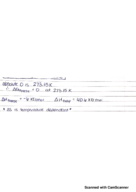
Converting Denver's average pressure of 24.9 in. Hg into various units. This video provides clear steps to determine equivalents in millimeters of mercury atmospheres pounds per square inch and pascals. Understand the relationships and conversions between these common pressure units.
Dimethylamine vs. Trimethylamine: Structures & Boiling Points
Want To Learn More? To watch the entire video and ALL of the videos in the series:
full solution
Uncover the science behind boiling points and molecular interactions in this video. Explore why Dimethylamine boils at a higher temperature than Trimethylamine, despite having a lower molecular weight, and gain insights into the role of molecular structures in determining physical properties.
Calculating Formula Masses: From Barium Bromide to Hydrobromic Acid
Want To Learn More? To watch the entire video and ALL of the videos in the series:
full solution
Understand the process of calculating formula masses for various compounds. This video breaks down the atomic masses for elements in barium bromide, dinitrogen trioxide, copper(I) sulfate, and hydrobromic acid. Master the method of summing up the masses considering atom count in each formula.