PreparED Study Materials

CHM 110: Chemistry 110
School: Arizona State University
Number of Notes and Study Guides Available: 2
Notes


Videos
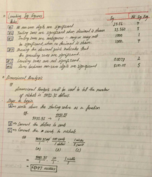
Classify: (a) Mixture (b) Element (c) Mixture (d) Compound

Want To Learn More? To watch the entire video and ALL of the videos in the series:
full solution
In this video, we classify substances as elements, compounds, or mixtures, with air and soy sauce as mixtures, iron as an element, and table salt as a compound.
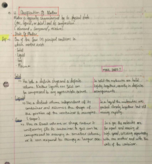
Why Fluorine Can't Form FH? or FCl?: Unpacking VSEPR Theory & Electron
Want To Learn More? To watch the entire video and ALL of the videos in the series:
full solution
Explore why fluorine, with its seven valence electrons, doesn't form compounds like FH? or FCl?. Understand the role of VSEPR theory, atomic size, and electronegativity in limiting bond formation. Grasp the interplay of geometric challenges and electron repulsion in compound stability.
Reaction Rate Impact: Ethanol, Tert-Butyl Bromide & Temp
Want To Learn More? To watch the entire video and ALL of the videos in the series:
full solution
Explore the intricacies of reaction rates with varying concentrations of ethanol and tert-butyl bromide. Understand the principles of SN1 reactions and the impacts of temperature on rate acceleration. Grasp the core elements that influence and optimize chemical reactions in diverse applications.
Drawing the Lewis Structure for Glycine: The Protein Building Block
Want To Learn More? To watch the entire video and ALL of the videos in the series:
full solution
Discover how amino acids, specifically glycine, form the foundation of proteins. Understand and visualize the Lewis structure representation of glycine. Grasp the significance of atomic bonding and electron distribution.
Comparing Masses: Analyzing Water, Ethanol, Chloroform & Balsa Wood
Want To Learn More? To watch the entire video and ALL of the videos in the series:
full solution
Explore the relationship between mass, density, and volume using real-life examples, including water, ethanol, chloroform, and balsa wood. Learn the process of calculating mass and uncover which substance has the highest mass based on given conditions.
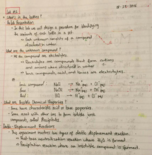
Utilizing Chemical Names and Symbols in Copper Cycle Analysis
Want To Learn More? To watch the entire video and ALL of the videos in the series:
full solution
Explore the power of chemical names and symbols in deciphering copper compound formation at each step of the copper cycle, with an illustrative example.