PreparED Study Materials

Notes


Study Guides
Videos
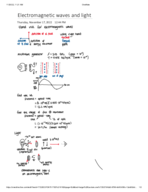
Deciphering Unknown Wavelength via Double Slit: The 355nm Light Revela

Want To Learn More? To watch the entire video and ALL of the videos in the series:
full solution
Uncover the methodology behind determining an unknown light's wavelength using the double slit experiment. Understand how fringe spacings relate to the light's properties. Find out the significance of second-order fringes and their measurements.
Pebble Velocity for Horizontal Impact on Juliet's Window
Want To Learn More? To watch the entire video and ALL of the videos in the series:
full solution
Explore the physics behind calculating the velocity of pebbles thrown by Romeo to hit Juliet's window with only a horizontal component.
Want To Learn More? To watch the entire video and ALL of the videos in the series:
full solution
Want To Learn More? To watch the entire video and ALL of the videos in the series:
full solution
Ground Ball Throw: Distance to Second Base and Vertical Drop
Want To Learn More? To watch the entire video and ALL of the videos in the series:
full solution
Join us on the baseball field as we calculate the physics of a ground ball throw to second base. In this video, we determine the distance from the shortstop to the second baseman and the vertical drop of the ball. Explore the principles of projectile motion in sports.
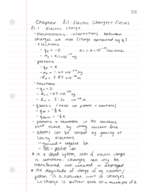
Calculating Electric Charge: Coulomb's Law Demystified
Want To Learn More? To watch the entire video and ALL of the videos in the series:
full solution
Unlock the secrets of calculating electric charge using Coulomb's Law and discover the fascinating world of electrostatic forces. Learn how to determine the charge on two spheres, spaced 20.0 cm apart, and understand the role of elementary particles in this physics tutorial.