PreparED Study Materials

CHEM 108: Fundamentals of Chemistry Lab
School: Colorado State University
Number of Notes and Study Guides Available: 0
Videos
Argon Isotopes: Protons, Neutrons & Electrons Breakdown

Want To Learn More? To watch the entire video and ALL of the videos in the series:
full solution
Explore the captivating branches of philosophy, understanding ethics as our moral guide, aesthetics as the interpreter of beauty, and logic as the foundation for clear reasoning. Delight in the insights these disciplines offer, enhancing our perspectives on life, art, and thought.
Glassware Drying with Acetone: The Science Behind It
Want To Learn More? To watch the entire video and ALL of the videos in the series:
full solution
This discussion delves into the use of acetone as a solvent for removing water from laboratory glassware, exploring the science behind its effectiveness and the role of hydrogen bonding in facilitating rapid evaporation.
Potassium and Iodine Monatomic Ions: Atomic Insights Revealed
Want To Learn More? To watch the entire video and ALL of the videos in the series:
full solution
Discover the monatomic ions formed by potassium and iodine in this informative chemistry tutorial. Learn how to determine ion charges based on atomic properties and their positions on the periodic table.
Dilution Calculations: Copper(II) Nitrate, Calcium Chloride, Lithium C
Want To Learn More? To watch the entire video and ALL of the videos in the series:
full solution
Learn how to perform dilution calculations for solutions, including copper(II) nitrate, calcium chloride, and lithium carbonate, to achieve specific concentrations.
Vaporization vs. Condensation: Heat Dynamics in Phase Transitions
Want To Learn More? To watch the entire video and ALL of the videos in the series:
full solution
Unravel the science behind endothermic and exothermic processes by studying vaporization and condensation. Grasp the molecular changes involved and understand the role of heat in these transformations. A comprehensive look into why vaporization requires heat, while condensation releases it.
Determining Ionizable H Atoms in Malonic Acid via Neutralization
Want To Learn More? To watch the entire video and ALL of the videos in the series:
full solution
Explore the process of determining ionizable hydrogen atoms in malonic acid using its molecular formula C3H4O4 and a neutralization reaction with Sodium hydroxide. Through methodical calculations involving the given mass of malonic acid and the required volume of Sodium hydroxide for neutralization we uncover that each molecule of malonic acid contains two ionizable H atoms.
Textbook Solutions (0)
Top Selling Study Tools
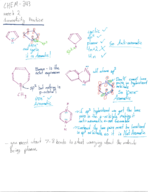

Chem 343 week 1 notes (8/22-8/26) (Chemistry)
CHEM 343
Colorado State University
7 pages | Fall 2015
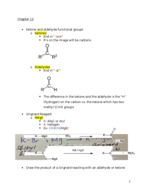



Organic chemistry week 4 notes (Chemistry)
CHEM 341
Colorado State University
11 pages | Spring 2016