PreparED Study Materials
CHEM 102: Essentials of Chemistry II
School: Boise State University
Number of Notes and Study Guides Available: 1
Notes

Videos
Lone Pair vs. Bonding Pair Electrons: Atomic Insights Unveiled

Want To Learn More? To watch the entire video and ALL of the videos in the series:
full solution
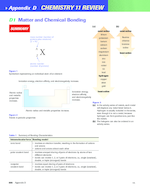
Explore the atomic world and the crucial distinctions between lone pair and bonding pair electrons in this insightful video. Delve into the fundamental aspects of atomic structure, electron orbitals, and their roles in chemical bonding, reactivity, and molecule formation.
Unraveling Hydrocarbon Structures: Decoding Degrees of Unsaturation
Want To Learn More? To watch the entire video and ALL of the videos in the series:
full solution
Explore the concept of the degree of unsaturation in hydrocarbons. Understand its importance in revealing double bonds, triple bonds, or rings. Learn through examples like limonene, squalene, and lycopene.
Mass Calc: C?F, MgF?, CS? & SO? Explained
Want To Learn More? To watch the entire video and ALL of the videos in the series:
full solution
Master the conversion of moles to grams with clear step-by-step guidance. Explore specific calculations for substances like carbon tetrafluoride and magnesium fluoride. Grasp the nuances of handling different units like millimoles and kilomoles in the context of substances such as carbon disulfide and sulfur trioxide
Indium Secrets: Electron Config Magnetism & HCl Reaction
Want To Learn More? To watch the entire video and ALL of the videos in the series:
full solution
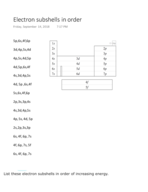
This video breaks down the configurations for In In+ In2+ and In3+ distinguishing between diamagnetic and paramagnetic properties. Uncover the oxidation state of Indium in InCl2 and understand its diamagnetic nature.
Determining Base Concentration Using KHP: Indicator Choice Solution
Want To Learn More? To watch the entire video and ALL of the videos in the series:
full solution
Discover how to choose the right indicator for a titration involving Potassium hydrogen phthalate (KHP) and a strong base. Grasp the calculations from molar mass to pH and understand why Thymolphthalein is the ideal choice for a change near pH 8.95.
pAg in KI & AgNO3 Titration: Exploring 39mL & 44.30mL Volumes
Want To Learn More? To watch the entire video and ALL of the videos in the series:
full solution
Exploring the titration of 25.00 mL of 0.08230 M KI with 0.05110 M AgNO3. This video breaks down the calculation process for the potential of silver ion at various volumes of added AgNO3: 39.00 mL equivalence point and 44.30 mL. With clear steps and using the solubility product constant understand how the potential of silver ion is determined for each scenario.