
PreparED Study Materials

PHYS 1101: Introductory Physics I
School: University of North Carolina - Charlotte
Number of Notes and Study Guides Available: 13
Notes


Study Guides

Videos
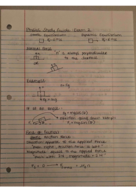
Sandal's Velocity Relative to Ship and Shore Observer

Want To Learn More? To watch the entire video and ALL of the videos in the series:
full solution
Explore the intriguing physics of a sandal dropped from a moving ship and learn how to calculate its velocity relative to the ship and a stationary observer on shore.
Comparing Single-Pane and Double-Pane Heat Loss Ratios
Want To Learn More? To watch the entire video and ALL of the videos in the series:
full solution
Explore the world of thermal insulation and heat loss in this video. We compare single-pane and double-pane windows, calculating the heat loss ratio. Delve into the fascinating science of heat transfer and insulation factors. Join us to uncover the secrets behind energy-efficient windows.
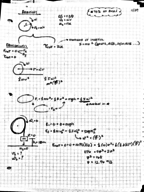
Track Radius for 5.5g Acceleration: Approximate Value
Want To Learn More? To watch the entire video and ALL of the videos in the series:
full solution
Delve into the physics of high-speed tracks and calculate the radius where drivers experience a 5.5g acceleration, exploring the multiple options and their implications.
Particle Count, Charge, and Mass of Electron-Proton System
Want To Learn More? To watch the entire video and ALL of the videos in the series:
full solution
oin us as we delve into the intriguing world of subatomic particles! In this video, we'll decipher the composition of a system containing 1525 electrons and protons with a net charge of -5.456 x 10^-17 C. Discover the precise number of electrons and calculate the total mass of this dynamic system. Unlock the secrets of particle physics with us!
Calculating Work from Speed Change: Water-Skiing Physics Explained!
Want To Learn More? To watch the entire video and ALL of the videos in the series:
full solution
Explore the physics behind a water-skier accelerating from an initial speed to a faster one. Learn how to calculate the work done using the change in kinetic energy. Understand the principle of energy conservation through real-world examples.
Want To Learn More? To watch the entire video and ALL of the videos in the series:
full solution

