PreparED Study Materials

CHEM 33: Organic Chemistry 1: Structure and Reactivity
School: Stanford University
Number of Notes and Study Guides Available: 2
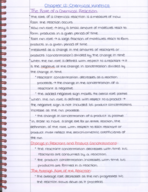
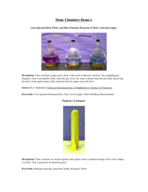
Notes
Videos
Calculate the Volume of 3.00 Moles of Kr(g) at STP

Want To Learn More? To watch the entire video and ALL of the videos in the series:
full solution
This video delves into the principles of gas behavior at standard temperature and pressure (STP) and how to determine the volume occupied by a given number of moles of gas under these conditions.
Homogeneous vs Heterogeneous Mixtures: Examples & Classification Expla
Want To Learn More? To watch the entire video and ALL of the videos in the series:
full solution
Explore the distinction between homogeneous and heterogeneous mixtures. Through real-world examples like baby oil, chocolate chip cookies, and wine, understand their uniformity, phases, and how components are distributed.
Determining Base Concentration Using KHP: Indicator Choice Solution
Want To Learn More? To watch the entire video and ALL of the videos in the series:
full solution
Discover how to choose the right indicator for a titration involving Potassium hydrogen phthalate (KHP) and a strong base. Grasp the calculations from molar mass to pH and understand why Thymolphthalein is the ideal choice for a change near pH 8.95.
Calculating MgO Mass from Oxygen Gas at STP
Want To Learn More? To watch the entire video and ALL of the videos in the series:
full solution
In this video, the problem involves calculating the mass of magnesium oxide (MgO) produced when 14.8 liters of oxygen gas react with magnesium metal according to the chemical equation 2Mg + O2 -> 2MgO. The stoichiometric relationship is used to determine that 0.6607 moles of oxygen gas results in 1.3214 moles of MgO, with a final calculation yielding a mass of 53.25 grams of MgO formed during the reaction at Standard Temperature and Pressure (STP).
Decoding Acid Formulas: From Phosphoric to Sulfurous - Chemistry Insig
Want To Learn More? To watch the entire video and ALL of the videos in the series:
full solution
Explore the distinct chemical formulas of various acids like phosphoric, hydrobromic, and sulfurous acids. Understand their practical applications, from flavoring agents to sanitization in brewing. Highlighting their unique molecular makeup, learn the critical roles they play.
Converting Various Units: Weight, Time, Height, and Volume
Want To Learn More? To watch the entire video and ALL of the videos in the series:
full solution
This video focuses on unit conversions and the practical use of conversion factors to translate quantities between different units. It provides clear examples of converting 70 kilograms to pounds, translating 14 billion years into seconds, changing the height of a basketball player from feet and inches to meters, and converting cubic meters to liters, illustrating the importance of this skill in various scientific and everyday scenarios.