PreparED Study Materials
CHEM 450: Topics in Organic Chemistry
School: Xavier University
Number of Notes and Study Guides Available: 1
Notes
Videos
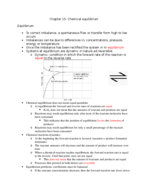
Determining the Equilibrium Constant: Initial & Final Concentrations

Want To Learn More? To watch the entire video and ALL of the videos in the series:
full solution
Explore the method to determine the equilibrium constant for a reaction between iron III ions and thiocyanate ions. Learn to deduce equilibrium concentrations from initial values and reaction stoichiometry. Grasp the importance of the equilibrium constant value of 325.1 in assessing the reaction's favorability.
Sketching Lewis Structures: Radical Species ClF? and BrO? Explained
Want To Learn More? To watch the entire video and ALL of the videos in the series:
full solution
This video elucidates the method to sketch Lewis structures for the radical species ClF? and BrO?. Highlighting the distinguishing feature of an unpaired electron, we illustrate the bond arrangements and lone pairs that define these unique chemical entities.
False Statements on the Periodic Table
Want To Learn More? To watch the entire video and ALL of the videos in the series:
full solution
Join us in this video as we debunk common misconceptions about the periodic table. We explore and clarify statements regarding atomic size, electron configurations, reactivity, and electron removal. Dive into the world of chemistry and gain a deeper understanding of the periodic table's fascinating principles.
Rutherford's Gold Foil: The Pivot to the Modern Nuclear Atom Model
Want To Learn More? To watch the entire video and ALL of the videos in the series:
full solution
Discover Rutherford's pivotal Gold Foil Experiment and its impact on atomic theory. Unveil the discrepancies with the Plum Pudding Model. Grasp the birth of the nuclear atom model through unexpected alpha particle deflections.
Understanding Electron Configurations of Ions: The Noble Gas Connectio
Want To Learn More? To watch the entire video and ALL of the videos in the series:
full solution
Unravel the electron configurations of diverse ions and discern their noble gas resemblances. Understand how atoms and ions strive for full outer electron shells for ultimate stability.
Molar Mass Calculation: Sr(OH)2 N2O3 NaClO3 Cr2O3 Explained!
Want To Learn More? To watch the entire video and ALL of the videos in the series:
full solution
In this chemistry tutorial learn how to calculate the molar mass of various compounds using atomic masses from the periodic table. Discover the molar mass for compounds such as Strontium Hydroxide Dinitrogen Trioxide Sodium Chlorate and Chromium(III) Oxide. A concise guide to understanding molar masses and their real-world applications.