PreparED Study Materials

CHEM 1212: Chemistry 1212
School: Georgia State University
Number of Notes and Study Guides Available: 49
Notes
















Study Guides






Videos
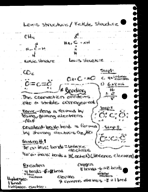
CO?: Linear & Nonpolar with Temp Dipole Moments Explained!

Want To Learn More? To watch the entire video and ALL of the videos in the series:
full solution
Uncover the nuances of the CO? molecule's polarity and its electron dynamics. Understand how bending and stretching motions influence its electron density. Grasp the analogy of CO? to a jumping rope, highlighting its overall nonpolar nature.
Differentiating Strong & Weak Electrolytes: Ionization in Aqueous Solu
Want To Learn More? To watch the entire video and ALL of the videos in the series:
full solution
Discover the difference between strong and weak electrolytes by understanding their ionization in water. Using nitrous acid and nitric acid as examples, this video provides chemical equations that visually distinguish the ionization behavior of these electrolytes.
Volume of 49.8g HCl Gas at STP: Finding the Answer in Liters
Want To Learn More? To watch the entire video and ALL of the videos in the series:
full solution
This video guides viewers through the process of calculating the volume occupied by Hydrochloric acid gas or HCl at standard temperature and pressure. Using the molar mass of HCl and its properties as an ideal gas the tutorial comprehensively explains each step to determine the volume from a given mass at STP. A must-watch for understanding gas volume conversions in chemistry
Decoding Compound Names: What's HNO2(aq) Called in Chemistry
Want To Learn More? To watch the entire video and ALL of the videos in the series:
full solution
Discover the process of naming acids based on their anions and oxidation states. This video breaks down the correct naming of HNO2(aq) by distinguishing its anion and determining its place in the world of mineral acids.
Understanding Polar & Nonpolar Molecules: From Diazene to Nitrogen Dio
Want To Learn More? To watch the entire video and ALL of the videos in the series:
full solution
Explore the properties of various molecules like diazene, hydrogen peroxide, and carbon tetrafluoride. Understand the influence of molecular shape and electronegativity on polarity. Discover why some are polar while others are nonpolar based on their structure.
Comparing Structural Features of Sphingomyelins and Glycolipids
Want To Learn More? To watch the entire video and ALL of the videos in the series:
full solution
This video explores the structural and functional differences between sphingomyelins and glycolipids, two types of lipids found in cell membranes, highlighting their commonalities in backbone and fatty acid composition and their distinctive roles in cell structure and recognition.
Textbook Solutions (0)
Top Selling Study Tools

Glycolysis regulation cheat sheet (Chemistry)
CHEM 4600
Georgia State University
3 pages | Fall 2015




Chem 1152k polysaccharide notes (Chemistry)
CHEM 1152
Georgia State University
2 pages | Winter 2016


Chem 1211k (finnegan) test dates (Chemistry)
CHEM 1211
Georgia State University
1 page | Spring 2016