PreparED Study Materials

CHEM 3021: Biochemistry
School: University of Minnesota
Number of Notes and Study Guides Available: 15
Notes
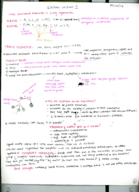
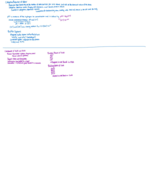

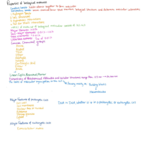


Study Guides









Videos
Counting Oxygen Atoms in Various Molecular Sets

Want To Learn More? To watch the entire video and ALL of the videos in the series:
full solution
Discover the simple yet essential method for counting the number of oxygen atoms in different molecular sets, including molecules and ions.
Why is Chloromethane Polar but Methane Nonpolar? Decoding Molecule Sha
Want To Learn More? To watch the entire video and ALL of the videos in the series:
full solution
Explore the polar nature of Chloromethane and the nonpolar characteristics of Methane. Understand the impact of electronegativity differences and bond types. Deciphering molecular polarity through the lens of tetrahedral structures.
Understanding STP: Calculating Gas Volumes at 0°C and 1 ATM
Want To Learn More? To watch the entire video and ALL of the videos in the series:
full solution
Discover the fundamental concept of Standard Temperature and Pressure (STP) and its relevance in determining the volume of different gases. Learn to calculate gas volumes at STP using real-life examples of Chlorine, Nitrogen, Helium, and Methane. Grasp essential chemistry concepts seamlessly with practical demonstrations.
Understanding Key Assumptions of Kinetic Molecular Theory in Detail!
Want To Learn More? To watch the entire video and ALL of the videos in the series:
full solution
Dive into the Kinetic Molecular Theory of Matter understanding how atoms and molecules possess kinetic energy which we measure as temperature. Explore the five core assumptions including the constant random motion of gas particles and the relation between kinetic energy and temperature. Demystify the concepts of particle collisions intermolecular interactions and the universal behavior of gases at given temperatures
Differential DNA Damage Responses in Prokaryotes and Eukaryotes
Want To Learn More? To watch the entire video and ALL of the videos in the series:
full solution
Explore unique strategies employed by prokaryotes and discover if they possess exclusive mechanisms for handling extreme DNA damage that elude eukaryotes."
The mass of a sugar crystal with 1.8 × 10¹? sucrose molecules
Want To Learn More? To watch the entire video and ALL of the videos in the series:
full solution
This video guides you through calculating the theoretical yield of a product in moles for a given chemical reaction by identifying the limiting reactant. It explains how to determine the limiting reactant for different quantities of reactants and then calculates the corresponding moles of the product, ensuring an accurate theoretical yield estimation.