
PreparED Study Materials
Notes






Study Guides





Videos
Lone Pair vs. Bonding Pair Electrons: Atomic Insights Unveiled

Want To Learn More? To watch the entire video and ALL of the videos in the series:
full solution
Explore the atomic world and the crucial distinctions between lone pair and bonding pair electrons in this insightful video. Delve into the fundamental aspects of atomic structure, electron orbitals, and their roles in chemical bonding, reactivity, and molecule formation.
Diprotic Acid Titration: Determining Molar Mass
Want To Learn More? To watch the entire video and ALL of the videos in the series:
full solution
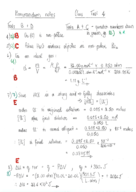
Discover how to find the molar mass of an unknown diprotic acid through a titration experiment with 0.1288 M NaOH. Learn step by step in this chemistry tutorial.
Structural Isomers: C4H10, C5H12, C6H14, C2H5Cl, C2H4Cl2, C2H3Cl3
Want To Learn More? To watch the entire video and ALL of the videos in the series:
full solution
Explore the diverse world of structural isomers! Learn how to draw structures for all constitutional isomers with various molecular formulas, including C4H10, C5H12, C6H14, C2H5Cl, C2H4Cl2, and C2H3Cl3.
Drawing Lewis Structures for Ionic Compounds: SrO Li2S CaI2 & RbF
Want To Learn More? To watch the entire video and ALL of the videos in the series:
full solution
Explore the art of constructing Lewis dot structures for ionic compounds such as SrO Li2S CaI2 and RbF. Understand the electron transfer process by diving into each atom's valency and its role in compound formation. Unpack the intricacies of ionic interactions for a deeper chemistry insight.
Calculating Percent Error: Insights into Experiment Accuracy & Refinem
Want To Learn More? To watch the entire video and ALL of the videos in the series:
full solution
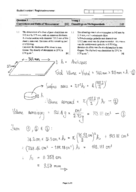
Discover the importance of calculating percent error to assess the precision of experiments. Through real-world examples like measuring alcohol's density and the mass of gold, learn how this value offers insights into measurement accuracy and ways to refine methods.
Comparing Masses: Analyzing Water, Ethanol, Chloroform & Balsa Wood
Want To Learn More? To watch the entire video and ALL of the videos in the series:
full solution
Explore the relationship between mass, density, and volume using real-life examples, including water, ethanol, chloroform, and balsa wood. Learn the process of calculating mass and uncover which substance has the highest mass based on given conditions.