
PreparED Study Materials
Notes






Study Guides


Videos
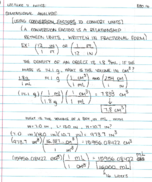
Weighting Epsom Salts for Baths & CO? in Soda: Molecular Insight

Want To Learn More? To watch the entire video and ALL of the videos in the series:
full solution
Learn the step-by-step process to convert moles into grams using the molecular weight of Epsom salts (MgSO?) and carbon dioxide (CO?). From bathtub to soda bottle understand the science behind the amounts
Diprotic Acid Titration: Determining Molar Mass
Want To Learn More? To watch the entire video and ALL of the videos in the series:
full solution
Discover how to find the molar mass of an unknown diprotic acid through a titration experiment with 0.1288 M NaOH. Learn step by step in this chemistry tutorial.
Reaction Rate Impact: Ethanol, Tert-Butyl Bromide & Temp
Want To Learn More? To watch the entire video and ALL of the videos in the series:
full solution
Explore the intricacies of reaction rates with varying concentrations of ethanol and tert-butyl bromide. Understand the principles of SN1 reactions and the impacts of temperature on rate acceleration. Grasp the core elements that influence and optimize chemical reactions in diverse applications.
Calculate oxygen molar concentration in water at 25°C with a partial p
Want To Learn More? To watch the entire video and ALL of the videos in the series:
full solution
This video explores molar concentration (molarity) and demonstrates the calculation of oxygen's molar concentration in water at 25°C, considering a partial pressure of 0.22 atm by employing Henry's Law and the given Henry's Law constant for oxygen, revealing that under these conditions, there are 2.86 x 10?? moles of oxygen per liter of water, highlighting the significance of understanding these concepts for managing gas dissolution in liquids across varying circumstances.
What are the ground-state electron configurations of Ge, Fe, Zn, Ni, W
Want To Learn More? To watch the entire video and ALL of the videos in the series:
full solution
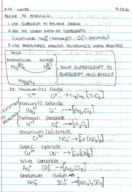
This video provides ground-state electron configurations for various elements, including germanium, iron, zinc, nickel, tungsten, and thallium, based on their atomic numbers.
Why is the study of chiral molecules important in biochemistry?
Want To Learn More? To watch the entire video and ALL of the videos in the series:
full solution
This discussion highlights the significance of studying chiral molecules in biochemistry, emphasizing their impact on biological activity, molecular recognition, pharmacokinetics, and biomedical research, without revealing specific examples or findings.