PreparED Study Materials

PHYS 160: Astronomy of the Solar System
School: University of Louisiana at Lafayette
Number of Notes and Study Guides Available: 3
Notes

Study Guides

Videos
Calculating Object and Oil Density through Buoyancy

Want To Learn More? To watch the entire video and ALL of the videos in the series:
full solution
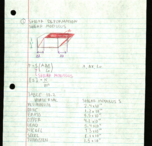
Dive into the world of buoyancy and density in this video! We explore how an object's weight changes when immersed in water and oil. Join us to calculate the density of the object and the oil, unraveling the principles of fluid dynamics and buoyant forces.
Sandal's Velocity Relative to Ship and Shore Observer
Want To Learn More? To watch the entire video and ALL of the videos in the series:
full solution
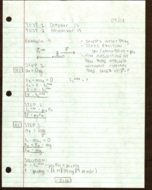
Explore the intriguing physics of a sandal dropped from a moving ship and learn how to calculate its velocity relative to the ship and a stationary observer on shore.
Squirrel's Fall: Velocity and Deceleration Analysis
Want To Learn More? To watch the entire video and ALL of the videos in the series:
full solution
Analyze the physics of a falling squirrel, calculating its velocity upon hitting the ground and the deceleration due to limb bending.
Car Deceleration: Angular Acceleration, Revolutions, Time, Distance, a
Want To Learn More? To watch the entire video and ALL of the videos in the series:
full solution
Explore the physics of a car's quick deceleration, including angular acceleration, revolutions, time, distance, initial velocity, and the realism of the scenario.
Electric Watch Crystal: Frequency to Period Conversion
Want To Learn More? To watch the entire video and ALL of the videos in the series:
full solution
Uncover the secrets of watch crystals in this video! We convert the frequency of a quartz crystal used in electric watches into its period. Join us to explore the principles of timekeeping and crystal oscillations.
Adding Water to a Glass: Temperature Change Calculation
Want To Learn More? To watch the entire video and ALL of the videos in the series:
full solution
Watch as we explore the fascinating world of thermal expansion in this video. We start with a glass filled to the brim with 350.0 mL of water at a scorching 100.0°C, and then witness the magic unfold as the temperature decreases to a cool 20.0°C. But the real question is, how much more water can we add to the glass? Join us to find out!