PreparED Study Materials

CHEM 104: Introduction to Chemisty
School: Minnesota State University - Mankato
Number of Notes and Study Guides Available: 1
Notes

Videos
CS?, SO?, CH?, & CH?Cl: Are They Polar or Nonpolar Molecules?

Want To Learn More? To watch the entire video and ALL of the videos in the series:
full solution
Explore the polarity of Carbon disulfide, Sulfur dioxide, Methane, and Chloromethane. Learn how molecular shape influences electron distribution. Understand which molecules possess a net dipole moment and which ones don't.
Identifying Incorrect Ground-State Electron Configurations and Providi
Want To Learn More? To watch the entire video and ALL of the videos in the series:
full solution
This video delves into the significance of electron configurations in understanding an atom's chemical behavior. It examines and corrects inaccuracies in the electron configurations of Aluminium (Al), Boron (B), and Fluorine (F). For instance, the electron configuration for Aluminium is initially presented with an incorrect number of electrons in the 2p subshell, stressing the importance of adhering to the rules of electron configuration for precise atomic representation.
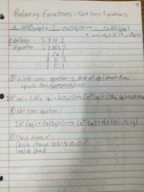
SN2 Rate: Doubling NaOH & 1-Bromopropane Effects
Want To Learn More? To watch the entire video and ALL of the videos in the series:
full solution
"Explore how altering concentrations and volume impacts the rate of an SN2 reaction between 1-bromopropane and sodium hydroxide. Learn the rate equation that describes this reaction and see real examples of how rate changes with concentration and volume adjustments
The mass of a sugar crystal with 1.8 × 10¹? sucrose molecules
Want To Learn More? To watch the entire video and ALL of the videos in the series:
full solution
This video guides you through calculating the theoretical yield of a product in moles for a given chemical reaction by identifying the limiting reactant. It explains how to determine the limiting reactant for different quantities of reactants and then calculates the corresponding moles of the product, ensuring an accurate theoretical yield estimation.
Speed of Light Explained: Earth, Billions of Km & the Concept of Light
Want To Learn More? To watch the entire video and ALL of the videos in the series:
full solution
Discover the incredible speed of light as it zips 7.5 times around Earth in just a second! Marvel at its daily and yearly travels, equating to billions and trillions of kilometers. Dive deeper into the concept of a 'light year' and its significance in astronomical measurements.
Heat Absorption: Lead Weight's Final Temperature
Want To Learn More? To watch the entire video and ALL of the videos in the series:
full solution
Explore the process of heat absorption and discover how to calculate the final temperature of a lead fishing weight after absorbing a specific amount of heat.