PreparED Study Materials

PHYS 383: Psychology of Sport and Physical Activity
School: California State University - Fullerton
Number of Notes and Study Guides Available: 0
Videos
Determining Kinetic Friction with a Spring-Loaded Block

Want To Learn More? To watch the entire video and ALL of the videos in the series:
full solution
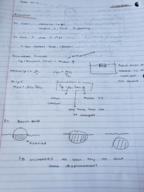
Understand how to determine the coefficient of kinetic friction using a wooden block and a spring. Employing the law of conservation of energy, we use the spring's compression and stretch measurements. Through energy equations and Newton's second law, we deduce that ? equals 0.4.
Terminal Voltage Calculation for Battery with Resistors
Want To Learn More? To watch the entire video and ALL of the videos in the series:
full solution
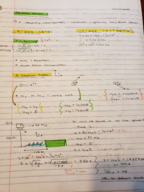
Unlock the secrets of battery performance in this video! We calculate the terminal voltage for a battery with internal resistance, connected in series with resistors of different values. Explore the effects of resistance on voltage in electrical circuits.
Want To Learn More? To watch the entire video and ALL of the videos in the series:
full solution
Car Spring Oscillations: Frequency When Driving Over Bumps Explained!
Want To Learn More? To watch the entire video and ALL of the videos in the series:
full solution
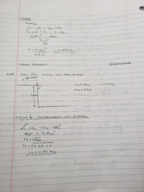
Discover the math behind car spring oscillations when driving over bumps. Understand how a car's weight and driver affect the spring constant and resulting frequency. Grasp the interplay of forces and how they dictate harmonic motion.
Calculating Resistance and Current in a 6.00-V Car Electrical System
Want To Learn More? To watch the entire video and ALL of the videos in the series:
full solution
Learn how to determine the hot resistance and current in the electrical system of older cars with a 6.00-V voltage supply.
Physics Behind Normal Force: Car & Driver on a Hill's Rounded Top at S
Want To Learn More? To watch the entire video and ALL of the videos in the series:
full solution
Unpack the concept of normal force on a sports car and its driver atop a hill. Utilize Newton's second law to calculate these forces based on speed and hill curvature. Discover the speed at which the driver feels weightless in the car.