PreparED Study Materials
CHEM 202: Organic Chemistry 1
School: University of the Sciences in Philadelphia
Number of Notes and Study Guides Available: 6
Notes


Study Guides


Videos
Unraveling Hydrocarbon Structures: Decoding Degrees of Unsaturation

Want To Learn More? To watch the entire video and ALL of the videos in the series:
full solution
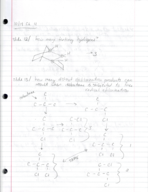
Explore the concept of the degree of unsaturation in hydrocarbons. Understand its importance in revealing double bonds, triple bonds, or rings. Learn through examples like limonene, squalene, and lycopene.
Mole Count in Elemental Samples (Zn, Ar, Ta, Li)
Want To Learn More? To watch the entire video and ALL of the videos in the series:
full solution
This video outlines the process of calculating the number of moles in various elemental samples. It begins by explaining the relationship between molar mass and atomic weight. Each sample's mass is divided by the respective element's molar mass to find the number of moles. It provides detailed calculations for four elemental samples: zinc (Zn), argon (Ar), tantalum (Ta), and lithium (Li), converting results to scientific notation where necessary. The script demonstrates how to determine the mole
Aluminum & Iron(III) Oxide Reaction: Welding Heat & Calculations
Want To Learn More? To watch the entire video and ALL of the videos in the series:
full solution
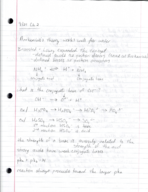
Explore the chemical reaction between Aluminum and Iron (III) Oxide commonly used in welding. Learn to calculate the mass of Aluminum Oxide formed and identify the excess reagent. Dive deep into molar mass conversions stoichiometry and real-world applications in this chemistry tutorial.
Structures & Classifications of C?H?? Alkyl Groups: From Primary to Te
Want To Learn More? To watch the entire video and ALL of the videos in the series:
full solution
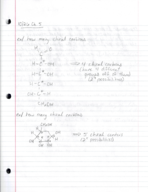
Explore the diverse structures of C?H?? alkyl groups and classify them into primary, secondary, or tertiary categories. Through a visualization of carbon atom arrangements, uncover the nuances of n-pentyl, sec-pentyl, tert-pentyl, isopentyl, and neopentyl structures.
Determining Mass Percent Concentration of Solutions
Want To Learn More? To watch the entire video and ALL of the videos in the series:
full solution
This instructional video demonstrates the process of calculating the mass percent of various solutions, using the formula "mass of solute divided by mass of solution, all multiplied by 100%." It provides step-by-step calculations for three different solutions, revealing the concentration of each solute in terms of mass percent, offering a practical understanding of quantifying solute proportions in solutions.
Key Biochemical Concepts: Polymer, Protein, Nucleic Acid, Catalysis, G
Want To Learn More? To watch the entire video and ALL of the videos in the series:
full solution
In biochemistry, polymers are essential macromolecules, including carbohydrates, lipids, proteins, and nucleic acids, each adopting specific shapes and performing vital functions within cells, with proteins serving diverse roles, nucleic acids carrying genetic information, catalysis expediting reactions, and the genetic code enabling protein synthesis.