PreparED Study Materials
CHEM 201: Organic Chemistry I
School: University of the Sciences in Philadelphia
Number of Notes and Study Guides Available: 20
Notes
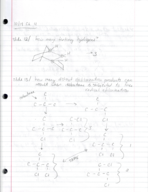


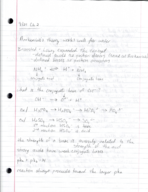

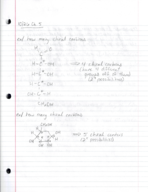




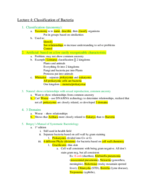
Study Guides



Videos

Want To Learn More? To watch the entire video and ALL of the videos in the series:
full solution
Deriving the Perfect Gas Equation from Gas Laws
Want To Learn More? To watch the entire video and ALL of the videos in the series:
full solution
Learn how the ideal gas equation is derived from Boyle's law, Charles’ law, and Avogadro's principle, unraveling the fundamentals of gas behavior.
Determining Neutrons from Atomic & Mass Numbers: A Comprehensive Guide
Want To Learn More? To watch the entire video and ALL of the videos in the series:
full solution
Understand the relationship between atomic number, mass number, and neutrons within atoms. This video breaks down the simple calculation to determine the number of neutrons for specific elements like Nickel, Uranium, Scandium, and Argon.
Unveiling the Water-to-Salt Ratio in Barium Chloride Hydrate
Want To Learn More? To watch the entire video and ALL of the videos in the series:
full solution
Explore the process of determining the number of water molecules in a barium chloride hydrate. Through a reaction with sulfuric acid, the video highlights how to derive the formation of barium sulfate and its mass calculations. A comprehensive chemical analysis leads to finding the elusive 'x' value, revealing the water-to-salt ratio.
Understanding Microwaves: Boiling Water's Time and Photon Count
Want To Learn More? To watch the entire video and ALL of the videos in the series:
full solution
This video breaks down the process of calculating the time and number of photons required to boil water in a microwave. Using given power, wavelength, and water specifics, we determine both energy needs and photon count.
0.800g Match to SO?: Volume Calculation at 725 Torr & 32°C!
Want To Learn More? To watch the entire video and ALL of the videos in the series:
full solution
Detailed walkthrough of calculating sulfur dioxide gas volume produced from burning tetraphosphorus trisulfide. Utilizes stoichiometry and the Ideal Gas Law to derive results under specific conditions. Step-by-step guide for understanding chemical reactions and gas volume calculations