PreparED Study Materials
CHEM 101: CHEM 101
School: University of Maryland - College Park
Number of Notes and Study Guides Available: 0
Videos

Want To Learn More? To watch the entire video and ALL of the videos in the series:
full solution
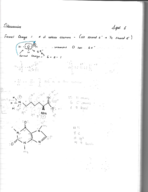
Oxidizing & Reducing Agents: Electron Exchange Demystified
Want To Learn More? To watch the entire video and ALL of the videos in the series:
full solution
Explore the world of oxidizing and reducing agents in chemistry. Gain a clear understanding of what they are and how they function without delving too deep into the subject matter.
Classify: (a) Mixture (b) Element (c) Mixture (d) Compound
Want To Learn More? To watch the entire video and ALL of the videos in the series:
full solution
In this video, we classify substances as elements, compounds, or mixtures, with air and soy sauce as mixtures, iron as an element, and table salt as a compound.
Converting Pressure Units to Atmospheres: mmHg, bars, Torr, kPa
Want To Learn More? To watch the entire video and ALL of the videos in the series:
full solution
In this instructional video, we explore the conversion of various pressure units into atmospheres, covering mmHg, bars, Torr, and kPa. The process involves utilizing conversion factors to ensure accurate results for each unit. By the end, you'll have equivalent pressures in atmospheres for the given values, enhancing your understanding of pressure conversions.
Endothermic Rxn: Ba(OH)2·8H2O & NH4NO3 Heat Dynamics
Want To Learn More? To watch the entire video and ALL of the videos in the series:
full solution
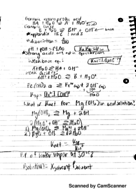
Explore the endothermic reaction between Ba(OH)2·8H2O and NH4NO3 observing its impact on surroundings like the freezing water. Discover why touching the beaker feels cold and learn about heat transfer in such chemical reactions. This video is an insightful demonstration of heat absorption in chemical reactions.
Electron Configurations: Zn Cu Zr & Fe Transition Metals Explained!
Want To Learn More? To watch the entire video and ALL of the videos in the series:
full solution
Unravel electron configurations for transition metals including zinc copper zirconium and iron. Understand how atomic number influences electron arrangement based on the Pauli exclusion principle Hund's rule and the Aufbau principle. Decode the configurations of each metal with clarity.