PreparED Study Materials

CHEM 241: Organic Chemistry II - Lecture
School: University of Arizona
Number of Notes and Study Guides Available: 37
Notes


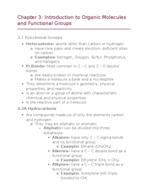
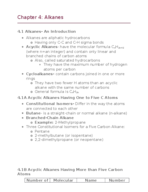
Organic chemistry, week 1, naming (Engineering)
CHEM 241
University of Arizona
2 pages | Spring 2015






Study Guides


Videos
Identify the 3' and 5' ends of the DNA segment AGTCAT

Want To Learn More? To watch the entire video and ALL of the videos in the series:
full solution
This video discusses the fundamental concept of DNA structure, focusing on the identification of the 3' and 5' ends of a DNA segment, specifically highlighting the sequence AGTCAT and its importance in understanding DNA strand direction for processes like replication and transcription.
Ether Structures: Ethyl to Dipentyl Varieties Drawn
Want To Learn More? To watch the entire video and ALL of the videos in the series:
full solution
Explore the chemical structures of four distinct ethers: ethyl propyl ether dibutyl ether methyl hexyl ether and dipentyl ether. Understand the role of ether groups which involve an oxygen atom connected to two alkyl or aryl groups.
Why Fluorine Can't Form FH? or FCl?: Unpacking VSEPR Theory & Electron
Want To Learn More? To watch the entire video and ALL of the videos in the series:
full solution
Explore why fluorine, with its seven valence electrons, doesn't form compounds like FH? or FCl?. Understand the role of VSEPR theory, atomic size, and electronegativity in limiting bond formation. Grasp the interplay of geometric challenges and electron repulsion in compound stability.
Iron Nail Heating: Finding Temperature After 15J Transfer
Want To Learn More? To watch the entire video and ALL of the videos in the series:
full solution
Discover the process of determining the final temperature of an iron nail after heat absorption. Using the specific heat capacity of iron and the heat transfer formula, we calculate the temperature increase and reveal the nail's new thermal state. This tutorial offers a clear understanding of how materials respond to heat.
Electrons in outer shell of: Potassium, Calcium, Aluminum
Want To Learn More? To watch the entire video and ALL of the videos in the series:
full solution
This video explains the importance of the number of valence electrons in an element's chemical behavior and demonstrates how to determine the valence electrons for potassium, calcium, and aluminum based on their positions in the periodic table. Valence electrons dictate an element's reactivity with other elements, making this knowledge essential for understanding chemical reactions.
Calculate oxygen molar concentration in water at 25°C with a partial p
Want To Learn More? To watch the entire video and ALL of the videos in the series:
full solution
This video explores molar concentration (molarity) and demonstrates the calculation of oxygen's molar concentration in water at 25°C, considering a partial pressure of 0.22 atm by employing Henry's Law and the given Henry's Law constant for oxygen, revealing that under these conditions, there are 2.86 x 10?? moles of oxygen per liter of water, highlighting the significance of understanding these concepts for managing gas dissolution in liquids across varying circumstances.