PreparED Study Materials

CHEM 622: Forensic Analytical Chemistry
School: University of South Carolina
Number of Notes and Study Guides Available: 3
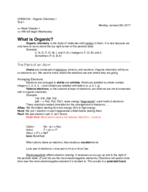
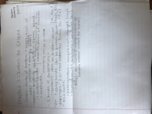
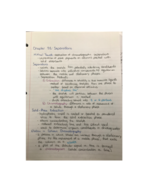
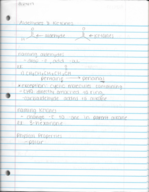
Notes



Videos

Want To Learn More? To watch the entire video and ALL of the videos in the series:
full solution
Quantitative vs Non-Quantitative: Precision in Scientific Observations
Want To Learn More? To watch the entire video and ALL of the videos in the series:
full solution
Unpack the difference between quantitative and non-quantitative observations. Examples include a person's weight on the Moon and the depth a hand pump can reach. Learn why precise measurements are crucial in scientific studies.
Element Classification: Rep, Trans, Inner-Trans, Noble Gases
Want To Learn More? To watch the entire video and ALL of the videos in the series:
full solution
We categorize elements into representative, transition, inner-transition, and noble gases based on their positions in the periodic table and general characteristics, without revealing specific element classifications.
Mass of Solutions: 12g Sucrose in 4.1%, 3.2%, & 12.5% Cases
Want To Learn More? To watch the entire video and ALL of the videos in the series:
full solution
Determining the total mass of sucrose solutions at varying concentrations: 4.1% 3.2% and 12.5%. Learn step-by-step calculations to find solution masses containing 12 grams of sucrose. Results: ~292.68g ~375g and 96g for each concentration respectively.
Chemical Formulas for Barium Hydroxide, Magnesium Sulfite, and More
Want To Learn More? To watch the entire video and ALL of the videos in the series:
full solution
This video discusses the process of writing chemical formulas for different compounds, providing details on the types and charges of ions involved in each compound's composition. The video concludes with the chemical formulas for barium hydroxide, magnesium sulfite, calcium carbonate, ammonium sulfate, and lithium hydrogen carbonate.
Determining Moles of Released Ions in Dissolution Reactions
Want To Learn More? To watch the entire video and ALL of the videos in the series:
full solution
When an ionic compound dissolves in water, it undergoes dissociation into its constituent ions. The total moles of ions released is determined by adding up the moles of each ion generated during this dissociation process. In the case of (a) disodium hydrogen phosphate (Na?HPO?), it dissociates into two sodium ions and one hydrogen phosphate ion. For (b) copper(II) sulfate pentahydrate (CuSO? · 5H?O), it dissociates into one copper ion and one sulfate ion. In (c), nickel(II) chloride (NiCl?) diss