PreparED Study Materials

CHEM 100: Principles of Chemistry
School: University of Tennessee - Knoxville
Number of Notes and Study Guides Available: 2
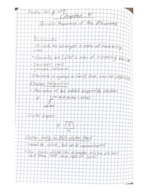
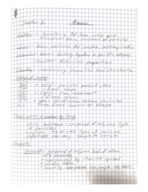
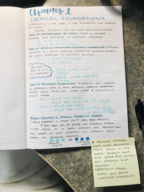
Notes


Videos
Molecule Count in 0.334 g of C?H?: Ethane Analysis

Want To Learn More? To watch the entire video and ALL of the videos in the series:
full solution
This instructional video guides you through the process of determining the number of molecules in a given sample. It illustrates the conversion from grams to moles using the molar mass of the substance and then to molecules using Avogadro's number, providing a practical example with ethane (C?H?) to calculate approximately 6.67 x 10²¹ molecules in a 0.334 g sample.
0.800g Match to SO?: Volume Calculation at 725 Torr & 32°C!
Want To Learn More? To watch the entire video and ALL of the videos in the series:
full solution
Detailed walkthrough of calculating sulfur dioxide gas volume produced from burning tetraphosphorus trisulfide. Utilizes stoichiometry and the Ideal Gas Law to derive results under specific conditions. Step-by-step guide for understanding chemical reactions and gas volume calculations
Utilizing Chemical Names and Symbols in Copper Cycle Analysis
Want To Learn More? To watch the entire video and ALL of the videos in the series:
full solution
Explore the power of chemical names and symbols in deciphering copper compound formation at each step of the copper cycle, with an illustrative example.
Calculating the Mass of CCl4: Using Density and Volume Insights
Want To Learn More? To watch the entire video and ALL of the videos in the series:
full solution
Learn the method to calculate the mass of a substance using its density and volume. This video demonstrates the practical application of density in determining the mass of carbon tetrachloride (CCl4) from a given volume.
Structures & Classifications of C?H?? Alkyl Groups: From Primary to Te
Want To Learn More? To watch the entire video and ALL of the videos in the series:
full solution
Explore the diverse structures of C?H?? alkyl groups and classify them into primary, secondary, or tertiary categories. Through a visualization of carbon atom arrangements, uncover the nuances of n-pentyl, sec-pentyl, tert-pentyl, isopentyl, and neopentyl structures.
What is a propeller twist?
Want To Learn More? To watch the entire video and ALL of the videos in the series:
full solution
Unravel the concept of propeller twist and its role in aviation and marine propulsion. We'll delve into the science and engineering behind this intriguing phenomenon, shedding light on its applications and significance.