PreparED Study Materials

Videos
Hydrocarbons vs. Organic Molecules: Key Differences

Want To Learn More? To watch the entire video and ALL of the videos in the series:
full solution
Discover the differences between hydrocarbons and other organic molecules. While hydrocarbons contain only carbon and hydrogen, other organic molecules integrate more elements and functional groups. This distinction leads to diverse chemical properties and vital biological functions.
Ion Pumps & Phagocytosis: Which Transport Types?
Want To Learn More? To watch the entire video and ALL of the videos in the series:
full solution
Explore active and passive transport and understand how ion pumps and phagocytosis fit in. Discover endocytosis as an active transport where cells engulf particles. Differentiate between active transport mechanisms and passive methods like facilitated diffusion.
Bacterial Genetic Variation: Meiosis Excluded from the Equation
Want To Learn More? To watch the entire video and ALL of the videos in the series:
full solution
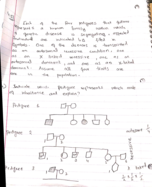
Explore the world of microbiology in this video as we investigate the processes that lead to genetic variation in bacterial populations. Learn about transduction, transformation, conjugation, and mutation, and discover why meiosis, a process occurring in sexually reproducing organisms, is not a source of genetic variation in bacteria.
Epiglottis & Glottis: Guardians of Breath and Swallow
Want To Learn More? To watch the entire video and ALL of the videos in the series:
full solution
Learn about the critical roles of the epiglottis and glottis in our respiratory and digestive systems. Understand how the epiglottis acts as a protective gate during swallowing, while the glottis facilitates sound production. Together, they ensure safe breathing and swallowing.
Aldosterone & Target Cells: Intracellular Receptor Insights
Want To Learn More? To watch the entire video and ALL of the videos in the series:
full solution
Learn why lipid-soluble signaling molecules like aldosterone only impact specific target cells. We discuss four theories and reveal that intracellular receptors present only in target cells are the key. This video demystifies the unique mechanism behind aldosterone's selective action.
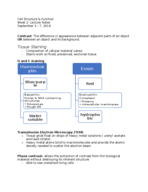
Identify the False Statement about Mucous and Serous Membranes
Want To Learn More? To watch the entire video and ALL of the videos in the series:
full solution
This video provides a comprehensive explanation of mucous and serous membranes, defining their characteristics and addressing statements about their epithelial types, functions, and exceptions.