PreparED Study Materials

PHYS 1111: Introductory Physics I
School: Georgia State University
Number of Notes and Study Guides Available: 1
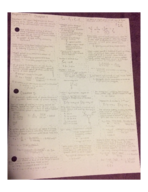
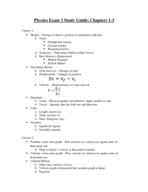
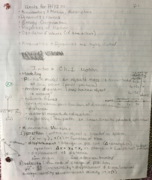
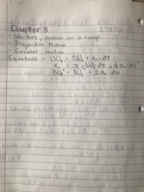
Study Guides
Videos
Understanding the Law of Conservation of Mass in Chemical Reactions

Want To Learn More? To watch the entire video and ALL of the videos in the series:
full solution
Explore the fundamental principles of this law, unraveling its implications, and clarifying common misconceptions related to mass preservation in chemical reactions.
Particle Count, Charge, and Mass of Electron-Proton System
Want To Learn More? To watch the entire video and ALL of the videos in the series:
full solution
oin us as we delve into the intriguing world of subatomic particles! In this video, we'll decipher the composition of a system containing 1525 electrons and protons with a net charge of -5.456 x 10^-17 C. Discover the precise number of electrons and calculate the total mass of this dynamic system. Unlock the secrets of particle physics with us!
Capacitor Potential, Separation, and Work Calculations
Want To Learn More? To watch the entire video and ALL of the videos in the series:
full solution
Explore the concept of capacitance and learn how to calculate potential difference, the impact of separation, and the work required for a parallel-plate air capacitor.
Virtual and Real Images of a Cat Facing a Converging Lens
Want To Learn More? To watch the entire video and ALL of the videos in the series:
full solution
Explore the fascinating optical phenomena involving a cat, a converging lens, and the creation of virtual and real images.
Rotating Wire Loop: Average Induced emf Calculation
Want To Learn More? To watch the entire video and ALL of the videos in the series:
full solution
Discover electromagnetic induction with a rotating wire loop! In this video, we explore how a 12.0-cm-diameter wire loop generates an induced emf when it's aligned with a magnetic field in 0.20 seconds. Dive into the world of electromagnetic phenomena and uncover the average induced emf.
Calculating k, Amplitude & Frequency for Fisherman's Scale
Want To Learn More? To watch the entire video and ALL of the videos in the series:
full solution
In this video we tackle the real-world physics problem of calculating the spring constant for a fisherman's scale along with the amplitude and frequency of its vibrations when a fish is added. We use Hooke's Law to find the spring constant and then apply oscillation formulas to determine the amplitude and frequency of the fish's vibrations