PreparED Study Materials

CHEM 62491: SEMINAR: ORGANIC CHEMISTRY
School: Kent State University
Number of Notes and Study Guides Available: 1
Notes
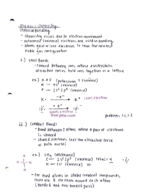
Organic chemistry week 1 notes (Engineering)
CHEM 62491
Kent State University
18 pages | Spring 2019
Videos
Why is a short RNA primer needed for replication?

Want To Learn More? To watch the entire video and ALL of the videos in the series:
full solution
Unlocking the Mystery of Short RNA Primers in DNA Replication: Discover the essential role they play and why they are a crucial component in the replication process. Join us in this video as we delve into the fascinating world of molecular biology and DNA replication.
Molecular Geometry & Polarity: Why CO? & CCl? Are Nonpolar Explained
Want To Learn More? To watch the entire video and ALL of the videos in the series:
full solution
Uncover the intriguing relationship between molecular geometry and polarity in chemistry. Using CO? and CCl? as examples, learn how polar bonds can result in nonpolar molecules. Recognize the role of symmetry in determining molecular polarity.
Want To Learn More? To watch the entire video and ALL of the videos in the series:
full solution
Precipitation Reactions Explained: From Solution to Solid Formation
Want To Learn More? To watch the entire video and ALL of the videos in the series:
full solution
Unravel the chemistry behind precipitation reactions and the creation of insoluble salts. Learn how aqueous ions interact to form solid precipitates, illustrated with examples like silver nitrate and sodium chloride. Understand their significance in fields from water treatment to qualitative analysis.
Mass of Fluorine in 24.6g SnF? Toothpaste: A Breakdown
Want To Learn More? To watch the entire video and ALL of the videos in the series:
full solution
Tin(II) Fluoride in Toothpaste: Dive into the chemistry of Tin(II) Fluoride commonly used in toothpaste to prevent tooth decay. Understand molar mass calculations stoichiometry and determine the fluoride content in a given compound
Classify: (a) Mixture (b) Element (c) Mixture (d) Compound
Want To Learn More? To watch the entire video and ALL of the videos in the series:
full solution
In this video, we classify substances as elements, compounds, or mixtures, with air and soy sauce as mixtures, iron as an element, and table salt as a compound.