
PreparED Study Materials

CHEM 107: Fundamentals of Chemistry (GT-SC2)
School: Colorado State University
Number of Notes and Study Guides Available: 2
Notes
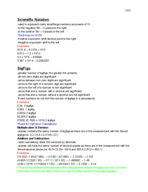
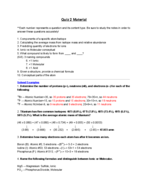
Study Guides
Videos

Want To Learn More? To watch the entire video and ALL of the videos in the series:
full solution
Oxidizing & Reducing Agents: Electron Exchange Demystified
Want To Learn More? To watch the entire video and ALL of the videos in the series:
full solution
Explore the world of oxidizing and reducing agents in chemistry. Gain a clear understanding of what they are and how they function without delving too deep into the subject matter.
Calculating Formula Masses: From Barium Bromide to Hydrobromic Acid
Want To Learn More? To watch the entire video and ALL of the videos in the series:
full solution
Understand the process of calculating formula masses for various compounds. This video breaks down the atomic masses for elements in barium bromide, dinitrogen trioxide, copper(I) sulfate, and hydrobromic acid. Master the method of summing up the masses considering atom count in each formula.
Determining the Equilibrium Constant: Initial & Final Concentrations
Want To Learn More? To watch the entire video and ALL of the videos in the series:
full solution
Explore the method to determine the equilibrium constant for a reaction between iron III ions and thiocyanate ions. Learn to deduce equilibrium concentrations from initial values and reaction stoichiometry. Grasp the importance of the equilibrium constant value of 325.1 in assessing the reaction's favorability.
Neon Gas Pressure Change in 0.75-L Cylinder
Want To Learn More? To watch the entire video and ALL of the videos in the series:
full solution
In this problem, we are tasked with determining the pressure of neon gas in a 0.75-L cylinder at 30°C after compressing it from a 2.50-L sample at 0.00°C and 1.00 atm using the combined gas law equation, with step-by-step calculations leading to a final pressure value of approximately 3.699 atm.
Structures & Classifications of C?H?? Alkyl Groups: From Primary to Te
Want To Learn More? To watch the entire video and ALL of the videos in the series:
full solution
Explore the diverse structures of C?H?? alkyl groups and classify them into primary, secondary, or tertiary categories. Through a visualization of carbon atom arrangements, uncover the nuances of n-pentyl, sec-pentyl, tert-pentyl, isopentyl, and neopentyl structures.


