PreparED Study Materials

CHM 25500: Organic Chemistry
School: Purdue University
Number of Notes and Study Guides Available: 33
Notes




Study Guides




Videos
Calculating Percent Composition: Using Molecular Formulas & Atomic Mas

Want To Learn More? To watch the entire video and ALL of the videos in the series:
full solution
Understand the process of calculating percent composition using the molecular formula. Grasp the methodology with compounds like C2H4O2, CH2O2, and more. Discover how atomic masses influence the mass percent of elements in various compounds.
Want To Learn More? To watch the entire video and ALL of the videos in the series:
full solution
Determining Ionizable H Atoms in Malonic Acid via Neutralization
Want To Learn More? To watch the entire video and ALL of the videos in the series:
full solution
Explore the process of determining ionizable hydrogen atoms in malonic acid using its molecular formula C3H4O4 and a neutralization reaction with Sodium hydroxide. Through methodical calculations involving the given mass of malonic acid and the required volume of Sodium hydroxide for neutralization we uncover that each molecule of malonic acid contains two ionizable H atoms.
Endothermic Rxn: Ba(OH)2·8H2O & NH4NO3 Heat Dynamics
Want To Learn More? To watch the entire video and ALL of the videos in the series:
full solution
Explore the endothermic reaction between Ba(OH)2·8H2O and NH4NO3 observing its impact on surroundings like the freezing water. Discover why touching the beaker feels cold and learn about heat transfer in such chemical reactions. This video is an insightful demonstration of heat absorption in chemical reactions.
Decoding Electron Configurations: From Rubidium to Argon Explained
Want To Learn More? To watch the entire video and ALL of the videos in the series:
full solution
Explore the intricacies of electron configurations around the atomic nucleus. Understand the ordered filling of energy levels in atoms like Rubidium, Germanium, and Argon. A deep look into the ground-state configurations of key elements.
Molecular Geometry & Polarity: Why CO? & CCl? Are Nonpolar Explained
Want To Learn More? To watch the entire video and ALL of the videos in the series:
full solution
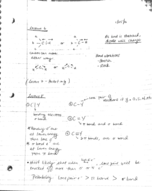
Uncover the intriguing relationship between molecular geometry and polarity in chemistry. Using CO? and CCl? as examples, learn how polar bonds can result in nonpolar molecules. Recognize the role of symmetry in determining molecular polarity.