PreparED Study Materials

CHM 38600: Cooperative Work Experience IV
School: Purdue University
Number of Notes and Study Guides Available: 0
Videos
What is meant by K?.??

Want To Learn More? To watch the entire video and ALL of the videos in the series:
full solution
Delve into the world of biochemistry and discover what this critical parameter means in the context of binding constants. We'll break down the significance of K?.? and explain how it's used to quantify the strength of interactions in various biological processes. Whether you're a student, scientist, or simply curious about the world of science, this video will provide you with a clear understanding of K?.? and its role in biochemical research.
Drawing the Lewis Structure for Glycine: The Protein Building Block
Want To Learn More? To watch the entire video and ALL of the videos in the series:
full solution
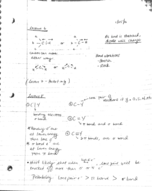
Discover how amino acids, specifically glycine, form the foundation of proteins. Understand and visualize the Lewis structure representation of glycine. Grasp the significance of atomic bonding and electron distribution.
8 kJ to
Want To Learn More? To watch the entire video and ALL of the videos in the series:
full solution
Molecular Lewis Structures for CH?, CO?, H?Se, and NH?
Want To Learn More? To watch the entire video and ALL of the videos in the series:
full solution
In this video, we demonstrate the creation of Lewis structures for methane, carbon dioxide, hydrogen selenide, and ammonia, highlighting the arrangement of atoms and bonds in each molecule. The video emphasizes the importance of Lewis structures in visualizing atomic bonding and the presence of lone electron pairs.
Calculating the Mass Percent Composition of Chloroform (CHCl?)
Want To Learn More? To watch the entire video and ALL of the videos in the series:
full solution
In this video, we delve into the concept of percent composition by mass, exemplified through the compound chloroform (CHCl?), which was once employed as an inhalation anesthetic despite its associated toxicity. By calculating the percent composition for each element within the compound, we gain valuable insights into its composition and its potential effects on health and properties.
Endothermic vs. Exothermic: Unraveling Heat Changes in Chemical Reacti
Want To Learn More? To watch the entire video and ALL of the videos in the series:
full solution
Explore the intricacies of endothermic and exothermic reactions through everyday examples. Delve into the energy dynamics of ice melting and water freezing, while emphasizing the importance of the heat change (?H) in these processes.