PreparED Study Materials

CH 106: Chemistry 106
School: University of Alabama - Tuscaloosa
Number of Notes and Study Guides Available: 0
Videos
Structural Isomers: C4H10, C5H12, C6H14, C2H5Cl, C2H4Cl2, C2H3Cl3

Want To Learn More? To watch the entire video and ALL of the videos in the series:
full solution
Explore the diverse world of structural isomers! Learn how to draw structures for all constitutional isomers with various molecular formulas, including C4H10, C5H12, C6H14, C2H5Cl, C2H4Cl2, and C2H3Cl3.
Vaporization vs. Condensation: Heat Dynamics in Phase Transitions
Want To Learn More? To watch the entire video and ALL of the videos in the series:
full solution
Unravel the science behind endothermic and exothermic processes by studying vaporization and condensation. Grasp the molecular changes involved and understand the role of heat in these transformations. A comprehensive look into why vaporization requires heat, while condensation releases it.
Ionic Character Comparison: Analyzing NaBr vs. HBr and BrCl vs. FCl
Want To Learn More? To watch the entire video and ALL of the videos in the series:
full solution
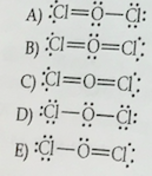
Discover the analysis of ionic character in compounds based on electronegativity differences. Learn about the contrasts between NaBr vs. HBr and BrCl vs. FCl. Grasp why NaBr and FCl showcase greater ionic character than their paired compounds.
pAg in KI & AgNO3 Titration: Exploring 39mL & 44.30mL Volumes
Want To Learn More? To watch the entire video and ALL of the videos in the series:
full solution
Exploring the titration of 25.00 mL of 0.08230 M KI with 0.05110 M AgNO3. This video breaks down the calculation process for the potential of silver ion at various volumes of added AgNO3: 39.00 mL equivalence point and 44.30 mL. With clear steps and using the solubility product constant understand how the potential of silver ion is determined for each scenario.
Number of molecules in 3.5g H?O, 56.1g N?, 89g CCl?, 19g C?H??O?
Want To Learn More? To watch the entire video and ALL of the videos in the series:
full solution
This video shows how to determine the number of molecules in a given sample by utilizing the concept of moles, Avogadro's number (6.022 x 10²³), and the molar mass of the substance. It provides step-by-step calculations for different substances, converting mass to the number of molecules and highlighting the versatile application of this approach.
Determining Base Concentration Using KHP: Indicator Choice Solution
Want To Learn More? To watch the entire video and ALL of the videos in the series:
full solution
Discover how to choose the right indicator for a titration involving Potassium hydrogen phthalate (KHP) and a strong base. Grasp the calculations from molar mass to pH and understand why Thymolphthalein is the ideal choice for a change near pH 8.95.