PreparED Study Materials

CHEM 246: Fundamentals of Organic Chemistry Laboratory
School: Colorado State University
Number of Notes and Study Guides Available: 0
Videos
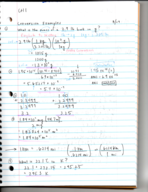
Calculating MgO Mass from Oxygen Gas at STP

Want To Learn More? To watch the entire video and ALL of the videos in the series:
full solution
In this video, the problem involves calculating the mass of magnesium oxide (MgO) produced when 14.8 liters of oxygen gas react with magnesium metal according to the chemical equation 2Mg + O2 -> 2MgO. The stoichiometric relationship is used to determine that 0.6607 moles of oxygen gas results in 1.3214 moles of MgO, with a final calculation yielding a mass of 53.25 grams of MgO formed during the reaction at Standard Temperature and Pressure (STP).
Structural Isomers: C4H10, C5H12, C6H14, C2H5Cl, C2H4Cl2, C2H3Cl3
Want To Learn More? To watch the entire video and ALL of the videos in the series:
full solution
Explore the diverse world of structural isomers! Learn how to draw structures for all constitutional isomers with various molecular formulas, including C4H10, C5H12, C6H14, C2H5Cl, C2H4Cl2, and C2H3Cl3.
Strontium: Deep Dive into Its Isotopes & Atomic Structure
Want To Learn More? To watch the entire video and ALL of the videos in the series:
full solution
Discover the step-by-step process of Barium Sulfate formation from the reaction of Barium Chloride with Sodium Sulfate. Learn about molar mass calculations stoichiometry and yield predictions.
Want To Learn More? To watch the entire video and ALL of the videos in the series:
full solution
Denver Pressure Conversion: Atmospheres mmHg psi & Pascals Explained
Want To Learn More? To watch the entire video and ALL of the videos in the series:
full solution
Converting Denver's average pressure of 24.9 in. Hg into various units. This video provides clear steps to determine equivalents in millimeters of mercury atmospheres pounds per square inch and pascals. Understand the relationships and conversions between these common pressure units.
Volume Calculation for Acetone, Olive Oil, and Chloroform
Want To Learn More? To watch the entire video and ALL of the videos in the series:
full solution
In this video, the presenter demonstrates the process of calculating the volume of 125g for three different liquids—Acetone, Olive oil, and Chloroform—using the formula "Volume = Mass / Density," providing step-by-step solutions for each liquid, ultimately revealing their respective volumes. This instructional video guides viewers through the calculations and showcases the outcome for each liquid's volume.
Textbook Solutions (0)
Top Selling Study Tools

Chem 343 week 1 notes (8/22-8/26) (Chemistry)
CHEM 343
Colorado State University
7 pages | Fall 2015



Organic chemistry week 4 notes (Chemistry)
CHEM 341
Colorado State University
11 pages | Spring 2016