PreparED Study Materials

CHM 11500: General Chemistry
School: Purdue University
Number of Notes and Study Guides Available: 117
Notes


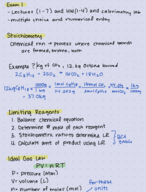


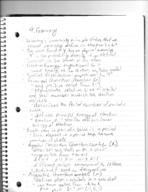






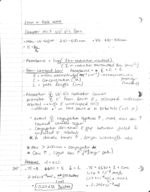
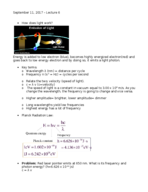
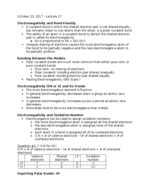
Chm 115 lecture 14: uv/vis spectroscopy (Chemistry)
CHM 11500
Purdue University
1 page | Spring 2015


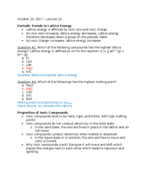






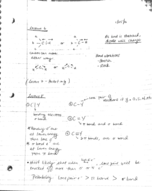
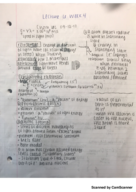
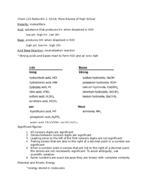
Chm 115 lecture 17: shapes of molecules (Chemistry)
CHM 11500
Purdue University
1 page | Spring 2015














Study Guides










Videos
Understanding Key Assumptions of Kinetic Molecular Theory in Detail!

Want To Learn More? To watch the entire video and ALL of the videos in the series:
full solution
Dive into the Kinetic Molecular Theory of Matter understanding how atoms and molecules possess kinetic energy which we measure as temperature. Explore the five core assumptions including the constant random motion of gas particles and the relation between kinetic energy and temperature. Demystify the concepts of particle collisions intermolecular interactions and the universal behavior of gases at given temperatures
Determining Mass Percent Concentration of Solutions
Want To Learn More? To watch the entire video and ALL of the videos in the series:
full solution
This instructional video demonstrates the process of calculating the mass percent of various solutions, using the formula "mass of solute divided by mass of solution, all multiplied by 100%." It provides step-by-step calculations for three different solutions, revealing the concentration of each solute in terms of mass percent, offering a practical understanding of quantifying solute proportions in solutions.
Why Fluorine Can't Form FH? or FCl?: Unpacking VSEPR Theory & Electron
Want To Learn More? To watch the entire video and ALL of the videos in the series:
full solution
Explore why fluorine, with its seven valence electrons, doesn't form compounds like FH? or FCl?. Understand the role of VSEPR theory, atomic size, and electronegativity in limiting bond formation. Grasp the interplay of geometric challenges and electron repulsion in compound stability.
Kettle Scale Removal: Water Filling Calculation
Want To Learn More? To watch the entire video and ALL of the videos in the series:
full solution
Learn a practical application of chemistry and mathematics in your daily life. Whether you're a tea or coffee enthusiast, this video offers valuable insights into scale removal and maintaining your kitchen appliances.
Endothermic vs. Exothermic: Unraveling Heat Changes in Chemical Reacti
Want To Learn More? To watch the entire video and ALL of the videos in the series:
full solution
Explore the intricacies of endothermic and exothermic reactions through everyday examples. Delve into the energy dynamics of ice melting and water freezing, while emphasizing the importance of the heat change (?H) in these processes.
Converting Pressure Units to Atmospheres: mmHg, bars, Torr, kPa
Want To Learn More? To watch the entire video and ALL of the videos in the series:
full solution
In this instructional video, we explore the conversion of various pressure units into atmospheres, covering mmHg, bars, Torr, and kPa. The process involves utilizing conversion factors to ensure accurate results for each unit. By the end, you'll have equivalent pressures in atmospheres for the given values, enhancing your understanding of pressure conversions.