PreparED Study Materials

CHEM 200: Frontiers in Chemistry
School: Kansas State University
Number of Notes and Study Guides Available: 1
Notes

Videos
Calculating the Mass Percent Composition of Chloroform (CHCl?)

Want To Learn More? To watch the entire video and ALL of the videos in the series:
full solution
In this video, we delve into the concept of percent composition by mass, exemplified through the compound chloroform (CHCl?), which was once employed as an inhalation anesthetic despite its associated toxicity. By calculating the percent composition for each element within the compound, we gain valuable insights into its composition and its potential effects on health and properties.
Mastering Molar Mass: Calculations for Key Chemical Compounds
Want To Learn More? To watch the entire video and ALL of the videos in the series:
full solution
Discover how to calculate the molar mass of various chemical compounds, including Mercury(I) chloride, Calcium sulfate dihydrate, Chlorine pentoxide, and Sodium hydrogen sulfate. Learn the step-by-step process and atomic mass calculations for accurate results.
Ether Structures: Ethyl to Dipentyl Varieties Drawn
Want To Learn More? To watch the entire video and ALL of the videos in the series:
full solution
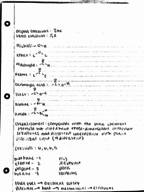
Explore the chemical structures of four distinct ethers: ethyl propyl ether dibutyl ether methyl hexyl ether and dipentyl ether. Understand the role of ether groups which involve an oxygen atom connected to two alkyl or aryl groups.
Counting Oxygen Atoms in Various Molecular Sets
Want To Learn More? To watch the entire video and ALL of the videos in the series:
full solution
Discover the simple yet essential method for counting the number of oxygen atoms in different molecular sets, including molecules and ions.
The steps in the electron transport chain from NADH to oxygen
Want To Learn More? To watch the entire video and ALL of the videos in the series:
full solution
The electron transport chain (ETC) is a critical process in cellular respiration and photosynthesis, involving the transfer of electrons and protons through a series of protein complexes and molecules to create an electrochemical gradient, ultimately producing ATP with molecular oxygen as the final electron acceptor.
Calculating Water's Final Temp after a 345 kJ Heat Boost
Want To Learn More? To watch the entire video and ALL of the videos in the series:
full solution
Discover how to determine the final temperature of a water sample after heat absorption. Utilizing the concept of specific heat capacity and the formula q = mc?T, we calculate the change in temperature and reveal its new state. Experience the transformation from an initial tepid state to a drastically altered thermal condition.