PreparED Study Materials

Notes
Videos
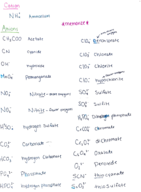
Potassium and Iodine Monatomic Ions: Atomic Insights Revealed

Want To Learn More? To watch the entire video and ALL of the videos in the series:
full solution
Discover the monatomic ions formed by potassium and iodine in this informative chemistry tutorial. Learn how to determine ion charges based on atomic properties and their positions on the periodic table.
Iron Bar: Mass Change and Rust Formation
Want To Learn More? To watch the entire video and ALL of the videos in the series:
full solution
Learn about mass changes in an iron bar when exposed to moist air, including the formation of rust (Fe?O?) and how to calculate the final mass.
Volume Calculation for Acetone, Olive Oil, and Chloroform
Want To Learn More? To watch the entire video and ALL of the videos in the series:
full solution
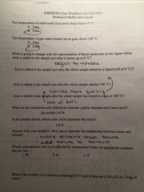
In this video, the presenter demonstrates the process of calculating the volume of 125g for three different liquids—Acetone, Olive oil, and Chloroform—using the formula "Volume = Mass / Density," providing step-by-step solutions for each liquid, ultimately revealing their respective volumes. This instructional video guides viewers through the calculations and showcases the outcome for each liquid's volume.
Number of molecules in 3.5g H?O, 56.1g N?, 89g CCl?, 19g C?H??O?
Want To Learn More? To watch the entire video and ALL of the videos in the series:
full solution
This video shows how to determine the number of molecules in a given sample by utilizing the concept of moles, Avogadro's number (6.022 x 10²³), and the molar mass of the substance. It provides step-by-step calculations for different substances, converting mass to the number of molecules and highlighting the versatile application of this approach.
Converting Various Units: Weight, Time, Height, and Volume
Want To Learn More? To watch the entire video and ALL of the videos in the series:
full solution
This video focuses on unit conversions and the practical use of conversion factors to translate quantities between different units. It provides clear examples of converting 70 kilograms to pounds, translating 14 billion years into seconds, changing the height of a basketball player from feet and inches to meters, and converting cubic meters to liters, illustrating the importance of this skill in various scientific and everyday scenarios.
Why is the study of chiral molecules important in biochemistry?
Want To Learn More? To watch the entire video and ALL of the videos in the series:
full solution
This discussion highlights the significance of studying chiral molecules in biochemistry, emphasizing their impact on biological activity, molecular recognition, pharmacokinetics, and biomedical research, without revealing specific examples or findings.