PreparED Study Materials

PHY 2054: College Physics B
School: Florida State University
Number of Notes and Study Guides Available: 1
Notes
Videos

Want To Learn More? To watch the entire video and ALL of the videos in the series:
full solution
Car Spring Oscillations: Frequency When Driving Over Bumps Explained!
Want To Learn More? To watch the entire video and ALL of the videos in the series:
full solution
Discover the math behind car spring oscillations when driving over bumps. Understand how a car's weight and driver affect the spring constant and resulting frequency. Grasp the interplay of forces and how they dictate harmonic motion.
Want To Learn More? To watch the entire video and ALL of the videos in the series:
full solution
Calculating Forces & Work for 330-kg Piano on 28° Incline
Want To Learn More? To watch the entire video and ALL of the videos in the series:
full solution
In this video we break down a complex physics problem about a 330-kg piano sliding down a 28° incline while a man resists its motion. We meticulously calculate the force exerted by the man work done by various forces including friction and gravity and the net work done on the piano.
Motorcycle vs. Bicycle Acceleration Comparison
Want To Learn More? To watch the entire video and ALL of the videos in the series:
full solution
Explore the fascinating comparison between the acceleration of a motorcycle going from 80 km/h to 90 km/h and a bicycle accelerating from rest to 10 km/h in the same time frame.
Calculating Rope Tension from a Central Hanging Weight: A Physics Appr
Want To Learn More? To watch the entire video and ALL of the videos in the series:
full solution
Discover how to calculate rope tension with an object hanging in the center. Understand the relationship between the sag, the weight of the object, and the tension. Convert the result into kilonewtons for easy reference.
Textbook Solutions (0)
Top Selling Study Tools
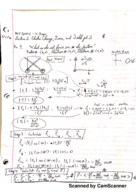


Human physiology, lecture 9, 10/4/16 (Physics)
PCB 4701
Florida State University
5 pages | Fall 2016