PreparED Study Materials

CHM 116: General Chemistry II
School: Grand Valley State University
Number of Notes and Study Guides Available: 6
Notes
Study Guides
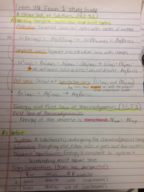

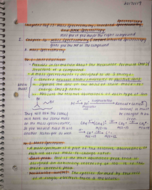
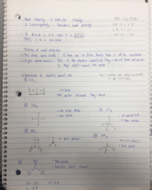
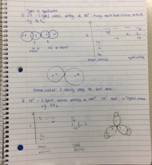
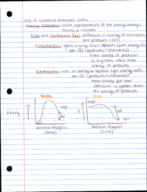
Ch 5 in-class test study guide (Chemistry)
CHM 116
Grand Valley State University
3 pages | Fall 2016


Videos
Classifying the Boiling of Water: Physical or Chemical Change? Justify

Want To Learn More? To watch the entire video and ALL of the videos in the series:
full solution
This video tackles the classification of boiling water as either a physical or chemical change, examining the provided options. We conclude that boiling is a physical change, as the water's chemical composition remains the same during the transition from liquid to gas.
Glassware Drying with Acetone: The Science Behind It
Want To Learn More? To watch the entire video and ALL of the videos in the series:
full solution
This discussion delves into the use of acetone as a solvent for removing water from laboratory glassware, exploring the science behind its effectiveness and the role of hydrogen bonding in facilitating rapid evaporation.
Lewis Structures with Atom Connections & Charges
Want To Learn More? To watch the entire video and ALL of the videos in the series:
full solution
Learn how to create Lewis structures for various molecules and assign charges where needed. Understand the molecular connectivity and electron distribution.
Counting Atoms in Sulfur Dioxide: From Moles to Molecules
Want To Learn More? To watch the entire video and ALL of the videos in the series:
full solution
Learn the method to determine the count of SO? molecules, sulfur, and oxygen atoms from a given amount of sulfur dioxide (SO?). Understand the application of Avogadro's number in translating moles to molecules. Grasp key concepts of atomic structure and counting with hands-on examples.
Molecular Geometry & Polarity: Why CO? & CCl? Are Nonpolar Explained
Want To Learn More? To watch the entire video and ALL of the videos in the series:
full solution
Uncover the intriguing relationship between molecular geometry and polarity in chemistry. Using CO? and CCl? as examples, learn how polar bonds can result in nonpolar molecules. Recognize the role of symmetry in determining molecular polarity.
Electron Configuration of Phosphorus: Decoding Atomic & Orbital Struct
Want To Learn More? To watch the entire video and ALL of the videos in the series:
full solution
Discover the intricacies of the electron configuration for phosphorus, from its atomic number to its orbital notation. Learn about unpaired electrons, energy levels, and the significance of inner-shell electrons. Understand how orbital structures define an element's properties.