PreparED Study Materials

CHEM 1110: Elementary Chemistry
School: Southern Utah University
Number of Notes and Study Guides Available: 6
Notes
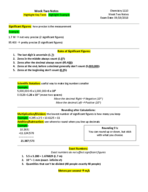

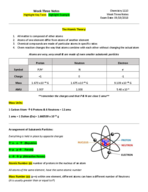
Study Guides


Videos
Pure Substances vs. Mixtures: Classifying Based on Composition & Distr

Want To Learn More? To watch the entire video and ALL of the videos in the series:
full solution
Understand the fundamental distinctions between pure substances and mixtures. Unpack the definitions and real-world examples of elements, compounds, homogeneous, and heterogeneous mixtures.
Moles of H in Samples: H?O, NH?, N?H?, C??H??
Want To Learn More? To watch the entire video and ALL of the videos in the series:
full solution
Discover how to calculate the number of moles of hydrogen in different chemical samples, including H?O, NH?, N?H?, and C??H??.
Balancing the Photosynthesis Equation: CO?, H?O to Glucose & O?
Want To Learn More? To watch the entire video and ALL of the videos in the series:
full solution
Discover the balanced chemical equation for photosynthesis, where CO? and H?O produce glucose and O?. Uncover the step-by-step breakdown of the equation, ensuring atom balance. Grasp a clear understanding of this vital process in plant biology.
Molecule Count in 0.334 g of C?H?: Ethane Analysis
Want To Learn More? To watch the entire video and ALL of the videos in the series:
full solution
This instructional video guides you through the process of determining the number of molecules in a given sample. It illustrates the conversion from grams to moles using the molar mass of the substance and then to molecules using Avogadro's number, providing a practical example with ethane (C?H?) to calculate approximately 6.67 x 10²¹ molecules in a 0.334 g sample.
Classifying Substances: From Pure Elements to Mixtures Explained
Want To Learn More? To watch the entire video and ALL of the videos in the series:
full solution
Classify substances into various categories: element compound homogeneous mixture and heterogeneous mixture. This video breaks down the fundamental distinctions between pure substances and mixtures illustrating with real-world examples like urine pure water a Snickers™ bar and soil. A concise guide for understanding the essence of material classification in chemistry.
Net ATP Yield from Oleic Acid (18:1 ??) Calculation
Want To Learn More? To watch the entire video and ALL of the videos in the series:
full solution
Join us in this video as we dive into the intricacies of calculating the net ATP yield from oleic acid (18:1 ??). We'll provide a step-by-step guide and offer helpful hints to ensure an accurate calculation, including a critical step that bypasses acyl-CoA dehydrogenase.