PreparED Study Materials

CHEM 178: General Chemistry II
School: Iowa State University
Number of Notes and Study Guides Available: 22
Notes



Study Guides


Videos
The steps in the electron transport chain from NADH to oxygen

Want To Learn More? To watch the entire video and ALL of the videos in the series:
full solution
The electron transport chain (ETC) is a critical process in cellular respiration and photosynthesis, involving the transfer of electrons and protons through a series of protein complexes and molecules to create an electrochemical gradient, ultimately producing ATP with molecular oxygen as the final electron acceptor.
Weighting Epsom Salts for Baths & CO? in Soda: Molecular Insight
Want To Learn More? To watch the entire video and ALL of the videos in the series:
full solution
Learn the step-by-step process to convert moles into grams using the molecular weight of Epsom salts (MgSO?) and carbon dioxide (CO?). From bathtub to soda bottle understand the science behind the amounts
Quantifying Atoms Molecules & Moles: A Comprehensive Chemistry Guide
Want To Learn More? To watch the entire video and ALL of the videos in the series:
full solution
Grasp the fundamental concept of moles in chemistry by equating it to the universally understood notion of a dozen. This video breaks down the usage of Avogadro's constant demonstrating calculations from moles to particles and vice versa. Using real-world examples like Carbon atoms Sulfur Dioxide molecules and Iron atoms viewers gain a clear understanding of moles and particle conversions
Denver Pressure Conversion: Atmospheres mmHg psi & Pascals Explained
Want To Learn More? To watch the entire video and ALL of the videos in the series:
full solution
Converting Denver's average pressure of 24.9 in. Hg into various units. This video provides clear steps to determine equivalents in millimeters of mercury atmospheres pounds per square inch and pascals. Understand the relationships and conversions between these common pressure units.
Pseudo-Noble Gas Configurations: A Unique Path to Atomic Stability
Want To Learn More? To watch the entire video and ALL of the videos in the series:
full solution
Discover the concept of the pseudo-noble gas configuration, differentiating it from the traditional noble gas configuration. Examine examples like tin and indium to illustrate how elements achieve this unique state of stability. Unpack the intriguing intricacies within atomic structures.
Molecular Lewis Structures for CH?, CO?, H?Se, and NH?
Want To Learn More? To watch the entire video and ALL of the videos in the series:
full solution
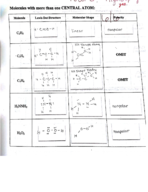
In this video, we demonstrate the creation of Lewis structures for methane, carbon dioxide, hydrogen selenide, and ammonia, highlighting the arrangement of atoms and bonds in each molecule. The video emphasizes the importance of Lewis structures in visualizing atomic bonding and the presence of lone electron pairs.