PreparED Study Materials

Notes




Study Guides

Videos
Determining Ionizable H Atoms in Malonic Acid via Neutralization

Want To Learn More? To watch the entire video and ALL of the videos in the series:
full solution
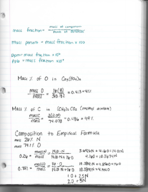
Explore the process of determining ionizable hydrogen atoms in malonic acid using its molecular formula C3H4O4 and a neutralization reaction with Sodium hydroxide. Through methodical calculations involving the given mass of malonic acid and the required volume of Sodium hydroxide for neutralization we uncover that each molecule of malonic acid contains two ionizable H atoms.
Balancing the Photosynthesis Equation: CO?, H?O to Glucose & O?
Want To Learn More? To watch the entire video and ALL of the videos in the series:
full solution
Discover the balanced chemical equation for photosynthesis, where CO? and H?O produce glucose and O?. Uncover the step-by-step breakdown of the equation, ensuring atom balance. Grasp a clear understanding of this vital process in plant biology.
Classifying Formaldehyde, Methanol, Dichloromethane & CO?: Polar or No
Want To Learn More? To watch the entire video and ALL of the videos in the series:
full solution
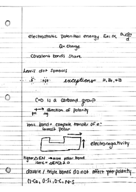
Explore the classification of select molecules based on their polarity. Understand the electron distribution and molecular shapes of Formaldehyde, Methanol, Dichloromethane, and Carbon dioxide. Discover which ones exhibit a net dipole moment and which ones don't.
Number of molecules in 3.5g H?O, 56.1g N?, 89g CCl?, 19g C?H??O?
Want To Learn More? To watch the entire video and ALL of the videos in the series:
full solution
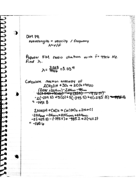
This video shows how to determine the number of molecules in a given sample by utilizing the concept of moles, Avogadro's number (6.022 x 10²³), and the molar mass of the substance. It provides step-by-step calculations for different substances, converting mass to the number of molecules and highlighting the versatile application of this approach.
Counting Chlorine Atoms in Key Chemical Compounds: A Detailed Breakdow
Want To Learn More? To watch the entire video and ALL of the videos in the series:
full solution
Uncover the count of chlorine atoms in various chemical compounds. Grasp the calculations in Carbon tetrachloride, Calcium chloride, Phosphorus trichloride, and Sodium chloride. Gain clarity on atomic count across multiple molecules.
SN2 Rate: Doubling NaOH & 1-Bromopropane Effects
Want To Learn More? To watch the entire video and ALL of the videos in the series:
full solution
"Explore how altering concentrations and volume impacts the rate of an SN2 reaction between 1-bromopropane and sodium hydroxide. Learn the rate equation that describes this reaction and see real examples of how rate changes with concentration and volume adjustments