PreparED Study Materials

CH E 110: Chemical Principles I
School: Pennsylvania State University
Number of Notes and Study Guides Available: 19
Notes
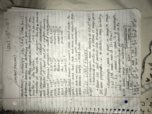
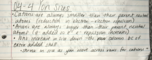

Chem 110b week 4 class notes (Chemistry)
CH E 110
Pennsylvania State University
20 pages | Fall 2014




Study Guides



Videos
Molecular Lewis Structures for CH?, CO?, H?Se, and NH?

Want To Learn More? To watch the entire video and ALL of the videos in the series:
full solution
In this video, we demonstrate the creation of Lewis structures for methane, carbon dioxide, hydrogen selenide, and ammonia, highlighting the arrangement of atoms and bonds in each molecule. The video emphasizes the importance of Lewis structures in visualizing atomic bonding and the presence of lone electron pairs.
Understanding Boiling Points: Ethylene Glycol, Alcohols & Ethers Expla
Want To Learn More? To watch the entire video and ALL of the videos in the series:
full solution
This video offers insights into the properties and boiling points of different alcohols and ethers, including antifreeze agents like ethylene glycol. We also discuss how molecular structures and interactions impact boiling points, shedding light on key differences among related compounds.
Calculating Ksp for Ca3(PO4)2 at 25°C: Step-by-Step Guide
Want To Learn More? To watch the entire video and ALL of the videos in the series:
full solution
Unravel the concepts of 'Molar Solubility' and 'Solubility Product' to gauge salt solubility. Explore how Calcium Phosphate dissociates in solutions and calculate its unique Ksp value.
Precipitation Reactions Explained: From Solution to Solid Formation
Want To Learn More? To watch the entire video and ALL of the videos in the series:
full solution
Unravel the chemistry behind precipitation reactions and the creation of insoluble salts. Learn how aqueous ions interact to form solid precipitates, illustrated with examples like silver nitrate and sodium chloride. Understand their significance in fields from water treatment to qualitative analysis.
Pure Substances vs. Mixtures: Classifying Based on Composition & Distr
Want To Learn More? To watch the entire video and ALL of the videos in the series:
full solution
Understand the fundamental distinctions between pure substances and mixtures. Unpack the definitions and real-world examples of elements, compounds, homogeneous, and heterogeneous mixtures.
Molar Mass Calculation: Sr(OH)2 N2O3 NaClO3 Cr2O3 Explained!
Want To Learn More? To watch the entire video and ALL of the videos in the series:
full solution
In this chemistry tutorial learn how to calculate the molar mass of various compounds using atomic masses from the periodic table. Discover the molar mass for compounds such as Strontium Hydroxide Dinitrogen Trioxide Sodium Chlorate and Chromium(III) Oxide. A concise guide to understanding molar masses and their real-world applications.