PreparED Study Materials

BIO 229: Nature Study
School: Central Michigan University
Number of Notes and Study Guides Available: 0
Videos
Accessory Digestive Organs: Functions and Importance

Want To Learn More? To watch the entire video and ALL of the videos in the series:
full solution
Explore the essential roles of accessory digestive organs, including the liver, pancreas, gallbladder, and salivary glands. Understand their functions, from enzyme secretion to nutrient breakdown. Gain insights into the intricacies of the human digestive process.
Anatomy Basics: Tissues, Organs, and Organ Systems Explained
Want To Learn More? To watch the entire video and ALL of the videos in the series:
full solution
Explore the definitions of tissue, organ, and organ system. Understand the distinctions and interconnectedness between these components. Get an overview of the human body's eleven major organ systems and their functions.
RFLP: Unlocking DNA Variations with Molecular Scissors
Want To Learn More? To watch the entire video and ALL of the videos in the series:
full solution
Unpack the concept of Restriction Fragment Length Polymorphism (RFLP), exploring the significance of DNA fragment variations. Learn how restriction enzymes act as molecular scissors, leading to insights into genetic disorders, biodiversity, and more.
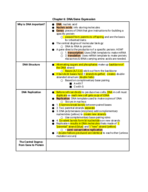
DNA Replication Explained: Climbing the Double-Helix Staircase
Want To Learn More? To watch the entire video and ALL of the videos in the series:
full solution
Explore the world of DNA replication by comparing it to climbing a staircase. Understand the roles of leading and lagging strands, and discover the importance of DNA Polymerase III in this intricate process.
Cellular Respiration: From Glucose to ATP, Powering Life's Bea
Want To Learn More? To watch the entire video and ALL of the videos in the series:
full solution
Explore the world of spontaneous reactions, focusing on cellular respiration. Learn how our cells convert glucose into energy-rich ATP, driving vital life functions.
What Process Involves Ion-Driven Molecule Transport in Opposite Direct
Want To Learn More? To watch the entire video and ALL of the videos in the series:
full solution
In cell biology, the "driving ion" is a pivotal concept. It refers to ions moving from areas of high to low concentration, generating energy for various cellular transport processes. This gradient is crucial for nutrient uptake and waste elimination. Multiple processes involve a driving ion, including facilitated diffusion, symport transport, primary active transport pumps, and cotransport. Facilitated diffusion aids molecule movement along their gradient, while symport moves multiple substance