PreparED Study Materials

CHEM 7265: Chemical Principles II
School: Truman State University
Number of Notes and Study Guides Available: 1
Notes

Videos
STP Reactions: How Phosphorus & Oxygen Form P?O??

Want To Learn More? To watch the entire video and ALL of the videos in the series:
full solution
Grasp the concept of Standard Temperature and Pressure (STP) and its significance in chemistry. Through a practical example, this video elucidates how phosphorus reacts with oxygen at STP to produce tetraphosphorus decaoxide. Comprehensive mole calculations and chemical equations simplify this intriguing chemical process.
Volume Calculation for Acetone, Olive Oil, and Chloroform
Want To Learn More? To watch the entire video and ALL of the videos in the series:
full solution
In this video, the presenter demonstrates the process of calculating the volume of 125g for three different liquids—Acetone, Olive oil, and Chloroform—using the formula "Volume = Mass / Density," providing step-by-step solutions for each liquid, ultimately revealing their respective volumes. This instructional video guides viewers through the calculations and showcases the outcome for each liquid's volume.
Theoretical Yield of TiCl? for Various Reactant Quantities
Want To Learn More? To watch the entire video and ALL of the videos in the series:
full solution
Explore how to calculate the theoretical yield of TiCl? in moles based on different initial quantities of reactants in the chemical equation Ti + 2 Cl? ? TiCl?.
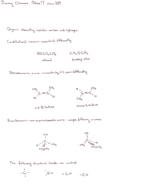
Drawing the Lewis Structure for Glycine: The Protein Building Block
Want To Learn More? To watch the entire video and ALL of the videos in the series:
full solution
Discover how amino acids, specifically glycine, form the foundation of proteins. Understand and visualize the Lewis structure representation of glycine. Grasp the significance of atomic bonding and electron distribution.
Ranking WO? Rb?SO? Pb(C?H?O?)? RbI by Decreasing Formula Mass
Want To Learn More? To watch the entire video and ALL of the videos in the series:
full solution
Discover the method to rank compounds like Tungsten Dioxide Rubidium Sulfate Lead Acetate and Rubidium Iodide based on their formula masses. Learn about the significance and calculation of a compound's formula mass. Conclude with an ordered list from heaviest to lightest based on our calculations
Dilution Calculations: Copper(II) Nitrate, Calcium Chloride, Lithium C
Want To Learn More? To watch the entire video and ALL of the videos in the series:
full solution
Learn how to perform dilution calculations for solutions, including copper(II) nitrate, calcium chloride, and lithium carbonate, to achieve specific concentrations.