PreparED Study Materials

CHEM 266: General Organic Chemistry II
School: Southeastern Louisiana University
Number of Notes and Study Guides Available: 3
Notes

Study Guides

Videos
Weight% of Ba, K, Cl in Heated BaCl2·2H2O & KCl Mix

Want To Learn More? To watch the entire video and ALL of the videos in the series:
full solution
In this video we explore the process of calculating the weight percent of barium potassium and chlorine in a mixed sample of barium chloride dihydrate and potassium chloride. Through a step-by-step approach we examine the changes in sample weight after heating to 160°C breaking down the calculations for each elemental content.
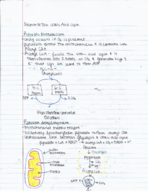
Where in the cell does fatty acid catabolism take place?
Want To Learn More? To watch the entire video and ALL of the videos in the series:
full solution
This video explores the process of fatty acid catabolism, highlighting its occurrence in the mitochondria, the crucial role of mitochondria in energy generation, and the metabolic reactions involved without revealing specific details or conclusions.
Calculating Formula Masses: From Barium Bromide to Hydrobromic Acid
Want To Learn More? To watch the entire video and ALL of the videos in the series:
full solution
Understand the process of calculating formula masses for various compounds. This video breaks down the atomic masses for elements in barium bromide, dinitrogen trioxide, copper(I) sulfate, and hydrobromic acid. Master the method of summing up the masses considering atom count in each formula.
Chemical Formulas: CaI?, N?O?, SiO?, ZnCl? for Atom Ratios
Want To Learn More? To watch the entire video and ALL of the videos in the series:
full solution
Unlock the world of chemical formulas and their atom ratios. Learn to write compounds like CaI?, N?O?, SiO?, and ZnCl? in this chemistry tutorial.
Calculating Silver Density from Weight and Water Displacement
Want To Learn More? To watch the entire video and ALL of the videos in the series:
full solution
Learn how to find the density of silver using weight and water displacement. A step-by-step guide to a common laboratory technique.
Diluting a 5.5 M KCl Solution to 0.100 M
Want To Learn More? To watch the entire video and ALL of the videos in the series:
full solution
Learn the steps to make a 2.5 L of 0.100 M KCl solution from a 5.5 M stock solution in this easy-to-follow tutorial.