PreparED Study Materials

CHEM 231: Chemistry 2 Recitation
School: Kansas State University
Number of Notes and Study Guides Available: 3
Notes


Videos
Theoretical Yield of TiCl? for Various Reactant Quantities

Want To Learn More? To watch the entire video and ALL of the videos in the series:
full solution
Explore how to calculate the theoretical yield of TiCl? in moles based on different initial quantities of reactants in the chemical equation Ti + 2 Cl? ? TiCl?.
Disulfur Decafluoride Disproportionation & Sulfur Oxidation States
Want To Learn More? To watch the entire video and ALL of the videos in the series:
full solution
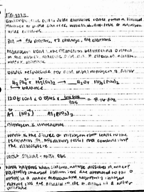
This video explains the disproportionation reaction of disulfur decafluoride at 150°C. It teaches you to write a balanced equation for this reaction and give the oxidation state of S in each compound.
Drawing Lewis Structures for Potassium, Barium, Aluminum, and Bromine
Want To Learn More? To watch the entire video and ALL of the videos in the series:
full solution
We explore Lewis structures, which depict atom bonding and lone electron pairs. We create Lewis structures for potassium, barium, aluminum, and bromine by using group numbers in the periodic table to determine their valence electrons.
Comparing Bond Types: Ethane's Nonpolarity vs. Fluoromethane's Ionic L
Want To Learn More? To watch the entire video and ALL of the videos in the series:
full solution
Examine the nature of bonds in methylamine, ethane, fluoromethane, and methanol. Identify ethane's nonpolar covalent bond and understand why fluoromethane's bond leans toward the ionic spectrum. Grasp essential concepts in molecular bonding with this deep analysis.
Weighting Epsom Salts for Baths & CO? in Soda: Molecular Insight
Want To Learn More? To watch the entire video and ALL of the videos in the series:
full solution
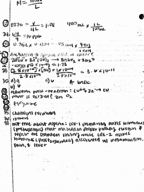
Learn the step-by-step process to convert moles into grams using the molecular weight of Epsom salts (MgSO?) and carbon dioxide (CO?). From bathtub to soda bottle understand the science behind the amounts
Identifying Elements, Compounds, and Mixtures
Want To Learn More? To watch the entire video and ALL of the videos in the series:
full solution
Join us in this enlightening video where we unravel the world of chemistry. We'll examine a series of options to identify elements, compounds, and mixtures. Explore the fascinating world of matter and discover how to distinguish these fundamental concepts. Whether you're a student or simply curious about the world of chemistry, this video will help you sharpen your understanding of the building blocks of matter.