PreparED Study Materials

CHEM 351: Organic Chemistry
School: Brigham Young University
Number of Notes and Study Guides Available: 30
Notes


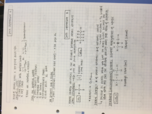
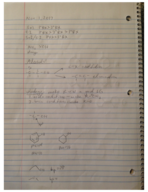
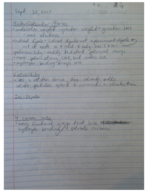
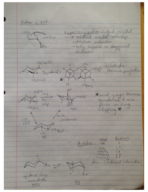
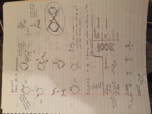
Chem 351 (nielson) week 2 notes (Chemistry)
CHEM 351
Brigham Young University
14 pages | Summer 2015









Study Guides


Videos

Want To Learn More? To watch the entire video and ALL of the videos in the series:
full solution
Strong vs. Weak Acids: Ionization Differences in Water
Want To Learn More? To watch the entire video and ALL of the videos in the series:
full solution
Uncover the distinct behaviors of hydrochloric acid and acetic acid in water. Learn about the complete ionization of strong acids and the partial ionization of weak ones, emphasizing the differentiation in proton donation.
Calculate oxygen molar concentration in water at 25°C with a partial p
Want To Learn More? To watch the entire video and ALL of the videos in the series:
full solution
This video explores molar concentration (molarity) and demonstrates the calculation of oxygen's molar concentration in water at 25°C, considering a partial pressure of 0.22 atm by employing Henry's Law and the given Henry's Law constant for oxygen, revealing that under these conditions, there are 2.86 x 10?? moles of oxygen per liter of water, highlighting the significance of understanding these concepts for managing gas dissolution in liquids across varying circumstances.
Decoding Electron Configurations: From Rubidium to Argon Explained
Want To Learn More? To watch the entire video and ALL of the videos in the series:
full solution
Explore the intricacies of electron configurations around the atomic nucleus. Understand the ordered filling of energy levels in atoms like Rubidium, Germanium, and Argon. A deep look into the ground-state configurations of key elements.
pAg in KI & AgNO3 Titration: Exploring 39mL & 44.30mL Volumes
Want To Learn More? To watch the entire video and ALL of the videos in the series:
full solution
Exploring the titration of 25.00 mL of 0.08230 M KI with 0.05110 M AgNO3. This video breaks down the calculation process for the potential of silver ion at various volumes of added AgNO3: 39.00 mL equivalence point and 44.30 mL. With clear steps and using the solubility product constant understand how the potential of silver ion is determined for each scenario.
0.800g Match to SO?: Volume Calculation at 725 Torr & 32°C!
Want To Learn More? To watch the entire video and ALL of the videos in the series:
full solution
Detailed walkthrough of calculating sulfur dioxide gas volume produced from burning tetraphosphorus trisulfide. Utilizes stoichiometry and the Ideal Gas Law to derive results under specific conditions. Step-by-step guide for understanding chemical reactions and gas volume calculations