PreparED Study Materials

CHM 10851: Introductory Chemistry
School: Grand Valley State University
Number of Notes and Study Guides Available: 1
Notes

Videos
Electronegativity & Acid Strength: Decoding Acid Formulas

Want To Learn More? To watch the entire video and ALL of the videos in the series:
full solution
This video discusses how the electronegativity of attached groups affects the strength of acids. Comparing pairs such as Chloroacetic vs Fluoroacetic and Acetic vs Nitroacetic acids, we highlight which is the stronger acid in each pair and why.
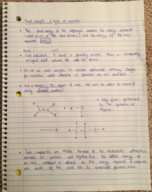
Copper Bombardment: Calculating X-ray Photon Energy
Want To Learn More? To watch the entire video and ALL of the videos in the series:
full solution
We'll guide you through the process of calculating the energy associated with X-ray photons when the wavelength is 0.154 nm. This video offers a practical application of physics and helps you understand the energy spectrum of X-rays. Whether you're a science enthusiast or a student, you'll gain valuable insights into this intriguing topic.
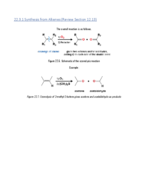
1828 Synthesis of Urea: Pioneering Steps in Biochemistry
Want To Learn More? To watch the entire video and ALL of the videos in the series:
full solution
Explore the groundbreaking moment in 1828 when Wöhler synthesized urea, the first organic compound. Join us in this video as we trace the profound impact of this achievement on the field of biochemistry and its significance in unraveling the mysteries of life's complex chemistry.
False Statements on the Periodic Table
Want To Learn More? To watch the entire video and ALL of the videos in the series:
full solution
Join us in this video as we debunk common misconceptions about the periodic table. We explore and clarify statements regarding atomic size, electron configurations, reactivity, and electron removal. Dive into the world of chemistry and gain a deeper understanding of the periodic table's fascinating principles.
The steps in the electron transport chain from NADH to oxygen
Want To Learn More? To watch the entire video and ALL of the videos in the series:
full solution
The electron transport chain (ETC) is a critical process in cellular respiration and photosynthesis, involving the transfer of electrons and protons through a series of protein complexes and molecules to create an electrochemical gradient, ultimately producing ATP with molecular oxygen as the final electron acceptor.
Quantitative vs Non-Quantitative: Precision in Scientific Observations
Want To Learn More? To watch the entire video and ALL of the videos in the series:
full solution
Unpack the difference between quantitative and non-quantitative observations. Examples include a person's weight on the Moon and the depth a hand pump can reach. Learn why precise measurements are crucial in scientific studies.