PreparED Study Materials

CHM 10888: Introductory Chemistry
School: Grand Valley State University
Number of Notes and Study Guides Available: 1
Notes

Videos
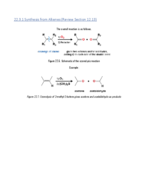
Comparing Bond Types: Ethane's Nonpolarity vs. Fluoromethane's Ionic L

Want To Learn More? To watch the entire video and ALL of the videos in the series:
full solution
Examine the nature of bonds in methylamine, ethane, fluoromethane, and methanol. Identify ethane's nonpolar covalent bond and understand why fluoromethane's bond leans toward the ionic spectrum. Grasp essential concepts in molecular bonding with this deep analysis.
Mastering Unit Conversions: From Light-Years to Feet/sec
Want To Learn More? To watch the entire video and ALL of the videos in the series:
full solution
Learn how to convert between various units of measurement, ranging from cosmic distances to everyday lengths. The video takes viewers through the process of translating light-years into miles, yards into centimeters, and incredibly high speeds from cm/s to feet per second. Simplifying complex conversions, this guide offers clarity in the world of physics.
Barium Chloride & Sodium Sulfate: Calculating BaSO? Yield
Want To Learn More? To watch the entire video and ALL of the videos in the series:
full solution
Dive into the chemical reaction between Barium Chloride and Sodium Sulfate. Through step-by-step calculations, discover how to determine the resultant mass of Barium Sulfate. Conclude with a real-world example, highlighting the precise amount formed.
Weight% of Ba, K, Cl in Heated BaCl2·2H2O & KCl Mix
Want To Learn More? To watch the entire video and ALL of the videos in the series:
full solution
In this video we explore the process of calculating the weight percent of barium potassium and chlorine in a mixed sample of barium chloride dihydrate and potassium chloride. Through a step-by-step approach we examine the changes in sample weight after heating to 160°C breaking down the calculations for each elemental content.
Hydrogen Peroxide Molecule Classification
Want To Learn More? To watch the entire video and ALL of the videos in the series:
full solution
This discussion explores the nature of hydrogen peroxide as a compound composed of hydrogen and oxygen atoms and categorizes it as either a homoatomic or heteroatomic molecule.
Calculating Backpacker's Fuel Weight: White Gas Density
Want To Learn More? To watch the entire video and ALL of the videos in the series:
full solution
Learn how to determine the weight of white gas carried by a backpacker using its density. A valuable skill for hikers and campers.