PreparED Study Materials

CHM 10890: Introductory Chemistry
School: Grand Valley State University
Number of Notes and Study Guides Available: 0
Videos
Determining Bond Types: Ionic, Polar Covalent, or Covalent in Chemical

Want To Learn More? To watch the entire video and ALL of the videos in the series:
full solution
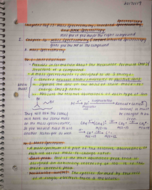
This discussion revolves around the classification of chemical bonds as ionic, polar covalent, or covalent based on the electronegativity difference between the atoms involved. The general criteria for this classification are explained: a difference greater than 1.7 indicates an ionic bond, between 0.5 and 1.7 signifies a polar covalent bond, and less than 0.5 designates a covalent bond. It then applies these criteria to four specific examples, including the CC bond in ethane (H?CCH?), the KI bo
Calculating the Mass of a Sucrose Crystal: A Chemistry Insight
Want To Learn More? To watch the entire video and ALL of the videos in the series:
full solution
Explore the fascinating world of chemistry as we calculate the mass of a sugar crystal with 1.8 x 10¹? molecules of sucrose. Using the concept of a mole and Avogadro's number, discover how to convert molecular numbers to milligrams. Grasp foundational principles in a clear, engaging format.
Endothermic vs. Exothermic: Unraveling Heat Changes in Chemical Reacti
Want To Learn More? To watch the entire video and ALL of the videos in the series:
full solution
Explore the intricacies of endothermic and exothermic reactions through everyday examples. Delve into the energy dynamics of ice melting and water freezing, while emphasizing the importance of the heat change (?H) in these processes.
8 kJ to
Want To Learn More? To watch the entire video and ALL of the videos in the series:
full solution
Calculating Water's Final Temp after a 345 kJ Heat Boost
Want To Learn More? To watch the entire video and ALL of the videos in the series:
full solution
Discover how to determine the final temperature of a water sample after heat absorption. Utilizing the concept of specific heat capacity and the formula q = mc?T, we calculate the change in temperature and reveal its new state. Experience the transformation from an initial tepid state to a drastically altered thermal condition.
Molecular Lewis Structures for CH?, CO?, H?Se, and NH?
Want To Learn More? To watch the entire video and ALL of the videos in the series:
full solution
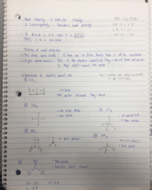
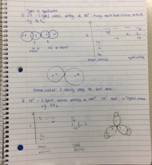
In this video, we demonstrate the creation of Lewis structures for methane, carbon dioxide, hydrogen selenide, and ammonia, highlighting the arrangement of atoms and bonds in each molecule. The video emphasizes the importance of Lewis structures in visualizing atomic bonding and the presence of lone electron pairs.