PreparED Study Materials

CHM 11079: Principles of Chemistry I
School: Grand Valley State University
Number of Notes and Study Guides Available: 0
Videos
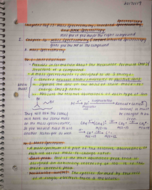
Molecular Lewis Structures for CH?, CO?, H?Se, and NH?

Want To Learn More? To watch the entire video and ALL of the videos in the series:
full solution
In this video, we demonstrate the creation of Lewis structures for methane, carbon dioxide, hydrogen selenide, and ammonia, highlighting the arrangement of atoms and bonds in each molecule. The video emphasizes the importance of Lewis structures in visualizing atomic bonding and the presence of lone electron pairs.
Drawing the Lewis Structure for Glycine: The Protein Building Block
Want To Learn More? To watch the entire video and ALL of the videos in the series:
full solution
Discover how amino acids, specifically glycine, form the foundation of proteins. Understand and visualize the Lewis structure representation of glycine. Grasp the significance of atomic bonding and electron distribution.
Connecting Volume & Moles: A Deep Look at Gas Stoichiometry & Ideal Ga
Want To Learn More? To watch the entire video and ALL of the videos in the series:
full solution
Understand gas stoichiometry by exploring the Ideal Gas Law, which integrates key laws like Gay-Lussac's, Charles's, Avogadro's, and Boyle's. Discover how this equation helps determine relationships between gas volumes and moles in reactions.
Understanding Polar & Nonpolar Molecules: From Diazene to Nitrogen Dio
Want To Learn More? To watch the entire video and ALL of the videos in the series:
full solution
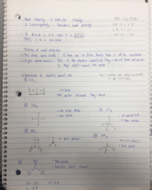
Explore the properties of various molecules like diazene, hydrogen peroxide, and carbon tetrafluoride. Understand the influence of molecular shape and electronegativity on polarity. Discover why some are polar while others are nonpolar based on their structure.
1828 Synthesis of Urea: Pioneering Steps in Biochemistry
Want To Learn More? To watch the entire video and ALL of the videos in the series:
full solution
Explore the groundbreaking moment in 1828 when Wöhler synthesized urea, the first organic compound. Join us in this video as we trace the profound impact of this achievement on the field of biochemistry and its significance in unraveling the mysteries of life's complex chemistry.
Converting Moles to Grams: Aluminum & Chlorine Atomic Mass Breakdown
Want To Learn More? To watch the entire video and ALL of the videos in the series:
full solution
"Explore the intricate world of atomic masses using aluminum and chlorine as examples. Understand the concept of 'mole' and its relevance in chemistry. Learn to calculate masses of moles for elements based on atomic weights.