PreparED Study Materials

CHM 11081: Principles of Chemistry I
School: Grand Valley State University
Number of Notes and Study Guides Available: 0
Videos
Amino Acid Reaction: Peptide Bond Formation and Product Diversity

Want To Learn More? To watch the entire video and ALL of the videos in the series:
full solution
Explore the reaction between alanine and glycine, two amino acids, and unravel whether this process results in multiple reaction products. We'll delve into the intriguing world of peptide bond formation and examine the potential diversity of products that may emerge from this biochemical reaction."
Strong Base Comparison: H?S?, CH?O?, CH?OH, Cl?, CH?COO?, CH?CHClCOO
Want To Learn More? To watch the entire video and ALL of the videos in the series:
full solution
Explore the reactivity of different bases in this chemistry comparison. We'll analyze the strength of H?S?, CH?O?, CH?OH, Cl?, CH?COO?, and CH?CHClCOO? in various reactions.
Understanding Polar & Nonpolar Molecules: From Diazene to Nitrogen Dio
Want To Learn More? To watch the entire video and ALL of the videos in the series:
full solution
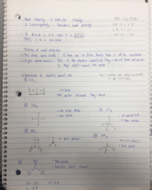
Explore the properties of various molecules like diazene, hydrogen peroxide, and carbon tetrafluoride. Understand the influence of molecular shape and electronegativity on polarity. Discover why some are polar while others are nonpolar based on their structure.
Moles of H in Samples: H?O, NH?, N?H?, C??H??
Want To Learn More? To watch the entire video and ALL of the videos in the series:
full solution
Discover how to calculate the number of moles of hydrogen in different chemical samples, including H?O, NH?, N?H?, and C??H??.
Differential DNA Damage Responses in Prokaryotes and Eukaryotes
Want To Learn More? To watch the entire video and ALL of the videos in the series:
full solution
Explore unique strategies employed by prokaryotes and discover if they possess exclusive mechanisms for handling extreme DNA damage that elude eukaryotes."
Calculating Percent Composition: Using Molecular Formulas & Atomic Mas
Want To Learn More? To watch the entire video and ALL of the videos in the series:
full solution
Understand the process of calculating percent composition using the molecular formula. Grasp the methodology with compounds like C2H4O2, CH2O2, and more. Discover how atomic masses influence the mass percent of elements in various compounds.