PreparED Study Materials

Notes

Videos
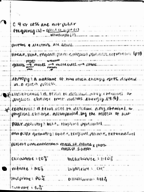
Does Cesium Bromide & Hydrogen Iodide in Water Conduct Electricity?

Want To Learn More? To watch the entire video and ALL of the videos in the series:
full solution
Explore the conductivity of aqueous solutions: Cesium bromide and hydrogen iodide. Understand their ionic nature and how it leads to the presence of charged ions enabling electricity conduction
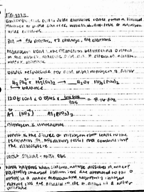
BrF?, ClF?, & IF? Lewis Structures: Which Don't Obey Octet Rule?
Want To Learn More? To watch the entire video and ALL of the videos in the series:
full solution
Unravel the Lewis structures of BrF?, ClF?, and IF? and their relationship with the octet rule. Examine how fluorine bonds with bromine, chlorine, and iodine. Identify molecules that deviate from the standard octet distribution.
Dilution Calculations: Copper(II) Nitrate, Calcium Chloride, Lithium C
Want To Learn More? To watch the entire video and ALL of the videos in the series:
full solution
Learn how to perform dilution calculations for solutions, including copper(II) nitrate, calcium chloride, and lithium carbonate, to achieve specific concentrations.
Ionic vs. Molecular: Classifying Compounds & Metal Ion Varieties!
Want To Learn More? To watch the entire video and ALL of the videos in the series:
full solution
Discover the art of classifying compounds as ionic or molecular based on bonding. Unravel the nuances between ionic and covalent bonds using electronegativity differences as a guide. Classify CoCl2 CF4 BaSO4 and NO with in-depth explanations and predict their properties.
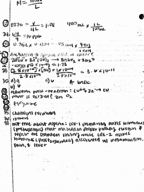
Neon Gas Pressure Change in 0.75-L Cylinder
Want To Learn More? To watch the entire video and ALL of the videos in the series:
full solution
In this problem, we are tasked with determining the pressure of neon gas in a 0.75-L cylinder at 30°C after compressing it from a 2.50-L sample at 0.00°C and 1.00 atm using the combined gas law equation, with step-by-step calculations leading to a final pressure value of approximately 3.699 atm.
H-Cl Bond Energy Explained: ?H Signs Formation & Breakage Dynamics
Want To Learn More? To watch the entire video and ALL of the videos in the series:
full solution
Explore the concept of bond energy with the H-Cl bond as a prime example. Delve into the energy dynamics of bond breaking (endothermic positive ?H) versus bond formation (exothermic negative ?H). Understand how the magnitude remains consistent but signs differ based on energy absorption or release.