PreparED Study Materials
PHYS 2110: Calculus-Based Physics I
School: Louisiana State University
Number of Notes and Study Guides Available: 1
Notes
Videos
Advantages of Laboratory-Based Measurement Standards

Want To Learn More? To watch the entire video and ALL of the videos in the series:
full solution
Discover the key reasons why measurement standards rooted in laboratory procedures offer advantages over standards based on specific objects, like the international prototype kilogram. Dive into the world of metrology and standardization in this informative video.
Physics of Bouncing: Calculating Velocity & Energy Conservation Explor
Want To Learn More? To watch the entire video and ALL of the videos in the series:
full solution
Discover how energy conservation principles determine the velocity of a bouncing ball. Relate the ball's height and its potential and kinetic energies. Understand the velocity change upon impact and rebound.
Adding Water to a Glass: Temperature Change Calculation
Want To Learn More? To watch the entire video and ALL of the videos in the series:
full solution
Watch as we explore the fascinating world of thermal expansion in this video. We start with a glass filled to the brim with 350.0 mL of water at a scorching 100.0°C, and then witness the magic unfold as the temperature decreases to a cool 20.0°C. But the real question is, how much more water can we add to the glass? Join us to find out!
Squirrel's Fall: Velocity and Deceleration Analysis
Want To Learn More? To watch the entire video and ALL of the videos in the series:
full solution
Analyze the physics of a falling squirrel, calculating its velocity upon hitting the ground and the deceleration due to limb bending.
Calculating Electric Charge: Coulomb's Law Demystified
Want To Learn More? To watch the entire video and ALL of the videos in the series:
full solution
Unlock the secrets of calculating electric charge using Coulomb's Law and discover the fascinating world of electrostatic forces. Learn how to determine the charge on two spheres, spaced 20.0 cm apart, and understand the role of elementary particles in this physics tutorial.
Projectile Motion: Speed, Height, Time & Range
Want To Learn More? To watch the entire video and ALL of the videos in the series:
full solution
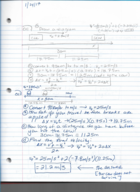
Join us for an engaging exploration of projectile motion as we dissect a fascinating scenario. We delve into the physics of a projectile fired with an initial speed of 36.6 m/s at an angle of 42.2° above the horizontal on a flat firing range. Discover how to determine the maximum height, total time in the air, total horizontal distance covered (range), and the speed of the projectile 1.50 seconds after firing. This video will demystify the dynamics of projectiles in a clear and educational manne